Gray Medical
Medical waste disposal compliance is not achieved by placing a red bag in the correct bin. It depends on daily decisions, trained staff, clear records, and reliable oversight. A used syringe, blood-stained dressing, or expired medicine can create different handling requirements. Small mistakes can expose workers, patients, contractors, and the environment to preventable risks. That is why every clinic, laboratory, and hospital needs a practical system rather than a policy that sits unread.
How to ensure compliance with medical waste disposal regulations? Start by identifying the waste generated at each point of care. Then match every category with approved containers, labels, storage limits, and collection procedures. Local rules differ, so responsible managers should verify requirements with environmental agencies and licensed waste contractors. Professional advice matters, especially when regulations change. It is also useful to inspect storage areas regularly. Look for leaking bags, missing labels, unsecured containers, or collection delays. These details reveal whether a written procedure works in real conditions.
The seven tips in this guide focus on prevention, accountability, and continuous improvement. They cover staff training, segregation, documentation, emergency planning, and vendor verification. A practical audit may uncover uncomfortable gaps. That is valuable. Compliance is not a one-time achievement; it requires evidence, honest review, and consistent action. When a team questions its own habits, safer disposal becomes part of patient care—not merely an administrative task. Mistakes still happen. Prepared teams respond quickly.
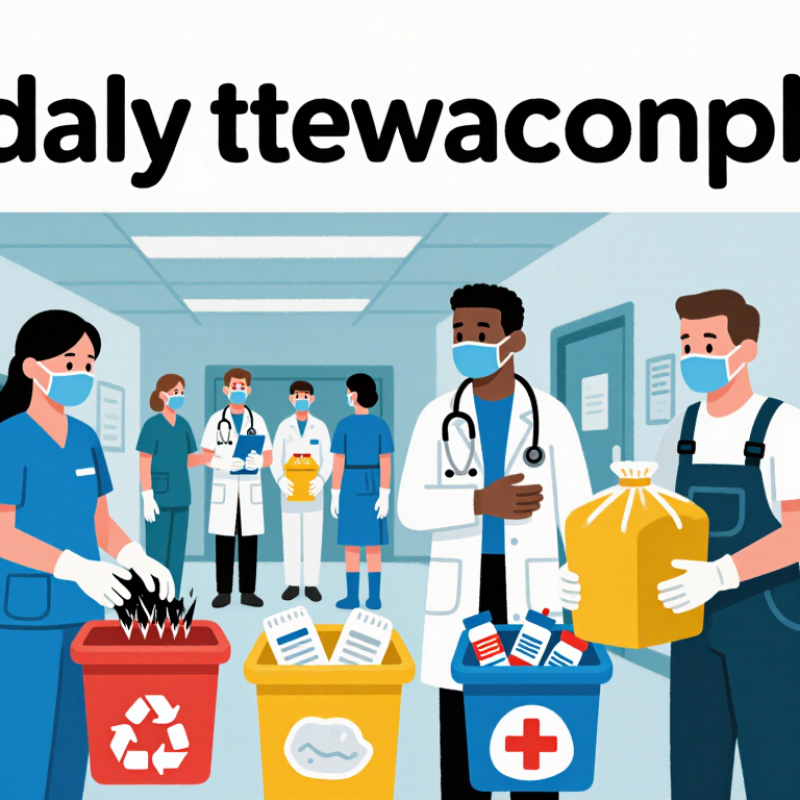
Medical waste compliance begins with classification, not collection. The WHO commonly estimates that about 85% of healthcare waste is non-hazardous. The remaining 15% may be infectious, toxic, or otherwise hazardous. This is a planning benchmark, not permission to treat every facility as identical. Local requirements and clinical activities still determine the final categories.
At the point of generation, place ordinary packaging, paper, food remnants, and uncontaminated materials in the general waste stream. Keep needles, blood-soaked dressings, laboratory cultures, and chemical residues separate. Use clear labels and closed containers. Segregation must happen beside the treatment bed, not beside the loading bay. A small mistake can contaminate an entire bag. In one practical review, mixed bins made the reported non-hazardous share look lower than expected. The team had to inspect purchasing, cleaning, and ward routines. The number was uncomfortable. It was useful.
Track the percentage by weight each week, using consistent sampling records. Record the ward, waste type, container, and reason for rejection. Train cleaners and clinical staff together, because handoffs create blind spots. Review gloves, gauze, and packaging separately; they do not always belong in the same category. Do not chase the 85% figure by relabeling uncertain waste. When classification is unclear, pause and seek qualified guidance. Documentation should show who decided, when, and why. That detail supports safer decisions during inspections and daily operations.
Tip 1:
Place color-coded, leak-resistant containers at every point of care. Segregation must happen immediately, not in a storage room. The World Health Organization reports that about 85% of healthcare waste is general, while 15% is hazardous. Mixing these streams increases handling risks and disposal costs.
Use clearly marked containers for sharps, infectious materials, pharmaceutical waste, and ordinary refuse. OSHA’s Bloodborne Pathogens Standard, 29 CFR 1910.1030, requires regulated waste containers to be closable, labeled, and resistant to leaks. Sharps containers should remain upright, close to the procedure area, and replaced before overfilling. Never push materials down by hand.
Tip 2:
Train staff with real examples. Show a used dressing, needle, and empty glove. Ask where each item belongs. This simple test reveals confusion quickly. WHO healthcare-waste guidance emphasizes staff training, safe segregation, and proper handling as core controls. Supervisors should inspect containers weekly and record missed items, damaged labels, and overflow events.
One weak point is assuming color codes are universal. They are not. Confirm local requirements and facility policy before training. Review the system after incidents, because a perfect procedure on paper may fail beside a busy treatment chair.
7 Tips to Ensure Medical Waste Disposal Compliance?
A puncture-resistant sharps container should stand at arm’s reach, not across the treatment room. Staff can discard needles immediately without carrying them through busy corridors. The container must remain upright, closable, leak-resistant, and clearly marked. Never recap, bend, or manually remove used needles. OSHA’s Bloodborne Pathogens Standard requires replacement before containers become overfilled or difficult to close.
The three-quarter rule deserves attention. A container filled below ¾ capacity leaves space for safe closure and reduces pressure on exposed sharps. A three-quarter line is useful, but it is not magic. Staff must replace the container earlier if needles protrude, jam near the opening, or push against the lid. WHO reports that about 15% of healthcare waste is hazardous, including sharps and other infectious materials. A small disposal mistake can therefore create a disproportionate exposure risk.
Placement and daily checks matter. A supervisor can inspect the fill level during each shift, record the check, and train workers using real containers. Labels should remain visible, even when lighting is poor or gloves become contaminated. The CDC recommends selecting containers that are closable, puncture-resistant, leak-resistant on the sides and bottom, and located close to the point of use. We sometimes treat compliance as paperwork. That is a weakness. The safer test is simple: can a worker discard one sharp immediately, without reaching over a full opening?
Sharps containers should be replaced before they become overfilled. The chart uses the ¾-capacity threshold as the operational limit: containers at 75% or more should be closed, removed, and replaced according to the applicable waste-management procedure.
Medical waste compliance depends on more than correct labeling. Storage and transport must follow approved time and temperature limits. In practice, small delays can create serious risks, especially in warm treatment areas. Confirm local requirements before setting internal limits, because rules vary by waste type and jurisdiction.
Tip 1: Record every collection time. Use a simple log showing the container number, waste category, storage temperature, and responsible employee. Keep records secure and readable. Tip 2: Check storage conditions during each shift. A visible thermometer helps, but staff must document the actual reading. Do not rely on memory. That habit fails under pressure.
Tip 3: Plan transport before containers reach their permitted holding time. Use trained personnel, sealed containers, and vehicles suited to the required temperature range. Record departure and arrival times, including any unexpected delay. A useful review asks one uncomfortable question: could another employee understand the record without explanation? If not, the process needs improvement. Labels can fade, and handwritten entries can become unclear. Replace damaged records promptly, preserve the original information, and investigate repeated temperature deviations. Supervisors should review logs regularly and refresh training when patterns appear. Small gaps often reveal larger weaknesses.
| No. | Compliance Tip | Required Control or Record | Regulatory Benchmark | Storage and Transport Check | Recommended Evidence |
|---|---|---|---|---|---|
| 1 | Classify waste before packaging | Separate regulated medical waste, sharps, pharmaceutical waste, chemical waste, pathological waste, and non-regulated general waste at the point of generation. | Use the applicable state, provincial, or national waste definitions. Infectious medical waste is not regulated identically in every jurisdiction. | Use leak-resistant, puncture-resistant, and clearly marked containers appropriate to the waste stream. Do not mix incompatible materials. | Waste classification guide, container inspection checklist, staff training records. |
| 2 | Apply correct labels and traceability | Record the waste type, accumulation start date, generator location, container identification number, quantity, and receiving facility. | For U.S. hazardous-material transport, regulated medical waste is commonly identified as UN 3291 when the applicable classification requirements are met. | Labels must remain legible during internal movement and external transport. Close containers before they are moved or placed in temporary storage. | Container log, label sample, shipment manifest, chain-of-custody record. |
| 3 | Control accumulation time | Track the date each container begins accumulation and the date it leaves the site. Use a first-in, first-out removal process. | U.S. RCRA hazardous-waste generator limits may include 90 days for large-quantity generators, 180 days for small-quantity generators, or 270 days when the receiving facility is more than 200 miles away. These limits do not automatically apply to every medical-waste stream. | Follow the shorter limit whenever local medical-waste rules, permit conditions, or facility procedures are more restrictive. | Aging report, accumulation-area inspection log, pickup schedule, exception report. |
| 4 | Maintain required temperature conditions | Document the storage temperature requirement for each waste category and the corrective action for temperature excursions. | There is no single universal federal temperature limit for all medical waste. Refrigeration requirements and maximum holding times are commonly established by local regulations, permits, or waste-treatment procedures. | Use a calibrated thermometer or data logger where refrigeration is required. Record temperature at defined intervals and during transport when specified by the applicable rule. | Temperature log, calibration record, alarm history, excursion investigation, corrective-action report. |
| 5 | Use compliant transport packaging | Use an approved inner container, secondary containment where required, absorbent material for liquids, and a secure outer package suitable for the waste classification. | U.S. DOT hazardous-material packaging, marking, labeling, and vehicle requirements apply when the shipment meets hazardous-material criteria. Transport personnel require function-specific training. | Inspect packages before loading for leaks, damage, closure failure, or missing marks. Secure packages to prevent shifting, tipping, or puncture during transit. | Pre-trip inspection, packaging checklist, carrier authorization, training record. |
| 6 | Keep documents for the required period | Retain manifests, transport records, treatment certificates, certificates of destruction, inspection logs, training records, and temperature records in an accessible system. | Under U.S. RCRA, hazardous-waste manifest copies are generally retained for at least 3 years. U.S. DOT hazardous-material training records must generally be kept for the duration of employment plus 90 days; training must be recurrent at least every 3 years. | Apply the longest applicable retention period when environmental, occupational-safety, healthcare, contract, or local requirements differ. | Controlled document register, retention schedule, access audit trail, backup verification. |
| 7 | Audit exceptions and close the loop | Review missed pickups, overdue containers, temperature excursions, damaged packages, spills, rejected loads, and incomplete documents. | Report spills, releases, injuries, and rejected shipments according to the applicable environmental, occupational-safety, transport, and local reporting requirements. | Perform documented inspections at least monthly, or more frequently when required by the permit, waste profile, or risk assessment. Assign an owner and due date for every corrective action. | Audit scorecard, incident report, corrective-action plan, management review record. |
Tip 1: Build training records that an auditor can understand in seconds. Keep attendance sheets, competency checks, and refresher dates together. Include the trainer’s qualifications and each worker’s assigned duties. A signed roster alone is weak evidence. Staff should explain labeling, storage limits, spill response, and escalation steps without guessing. Short drills often reveal gaps that classroom training misses.
Tip 2: Audit every waste manifest against the physical shipment. Check container counts, waste descriptions, weights, dates, signatures, and destination details. Compare the manifest with collection logs and photographs of sealed containers. A missing signature can delay verification for weeks. Use a monthly sample, then expand it when errors appear. The 100% target means every discrepancy receives documented review, not that mistakes never occur.
Tip 3: Treat incident records as operational evidence, not paperwork. Record the time, location, material involved, people notified, immediate controls, and corrective action. Link the incident to training and manifest records when relevant. Review recurring patterns during management meetings. For example, repeated leaks near a loading bay may indicate poor container placement, rushed handling, or unclear supervision. Our audits sometimes expose incomplete details after the event. That is uncomfortable, but useful. Require a follow-up owner and deadline, then verify closure with evidence. Keep records secure, readable, and available to authorized reviewers under applicable requirements.
Separate ordinary waste from infectious, toxic, chemical, and sharp materials. Classification begins where waste is created.
About 85% of healthcare waste is often considered non-hazardous. Treat this as a planning estimate, not a fixed rule.
Segregate waste beside the treatment bed or procedure area. Do not wait until the loading bay.
Keep needles, blood-soaked dressings, laboratory cultures, and chemical residues apart. Ordinary paper and clean packaging may use general waste containers.
Containers should be closable, clearly labeled, leak-resistant, and suitable for their waste type. Sharps containers must stay upright.
Use real examples, such as a used dressing, needle, and empty glove. Ask workers to choose each container. Confusion appears quickly.
Inspect containers weekly and track waste percentages by weight. Record the ward, container, waste type, and rejection reason.
Compare manifests with shipment counts, weights, dates, signatures, and sealed-container photographs. Investigate every discrepancy.
Record the time, location, material, people notified, immediate controls, and corrective action. Assign an owner and deadline.
Pause the process and seek qualified guidance. Do not relabel uncertain waste just to reach a target. That shortcut can fail later.
How to ensure compliance with medical waste disposal regulations? Start by classifying waste accurately, using the WHO’s 85% non-hazardous benchmark as a practical reference while identifying materials that require special handling. Segregate waste at the point of generation with clearly labeled, color-coded containers and follow applicable workplace safety requirements. Sharps should always be placed in rigid, puncture-resistant containers and never filled beyond three-quarters of their capacity to reduce injury risks.
Compliance also depends on controlling storage and transportation. Facilities should document collection dates, storage conditions, temperature requirements where applicable, and authorized movement within regulatory time limits. Finally, conduct regular audits of employee training, waste manifests, container inspections, and incident reports. Comparing these records against a 100% compliance target helps identify gaps early, improve accountability, and support continuous improvement in medical waste management.
