 Gray Medical
Gray Medical
Gray Medical
In the realm of laboratory diagnostics, the question "How do automated laboratory instruments reduce human error?" is paramount. Dr. Emily Carter, a leading expert in laboratory technology, emphasizes, "Automation enhances precision by minimizing the likelihood of human mistakes." This statement highlights a critical shift in laboratory processes.
Automated instruments, such as analyzers and robots, streamline tasks that were once reliant on human intervention. These devices perform repetitive tasks with consistent accuracy. For instance, they conduct sample analyses without the variability associated with manual handling. A study found that human errors can be reduced by up to 50% through automation.
However, not all aspects of automation are flawless. Occasionally, machines can malfunction or misinterpret data. This raises the question of whether we depend too heavily on technology. The balance between human oversight and machine efficiency remains a topic of debate. While automation significantly enhances accuracy, the human element cannot be entirely eliminated. Thus, exploring "How do automated laboratory instruments reduce human error?" also involves understanding the interaction between human operators and these technologies.
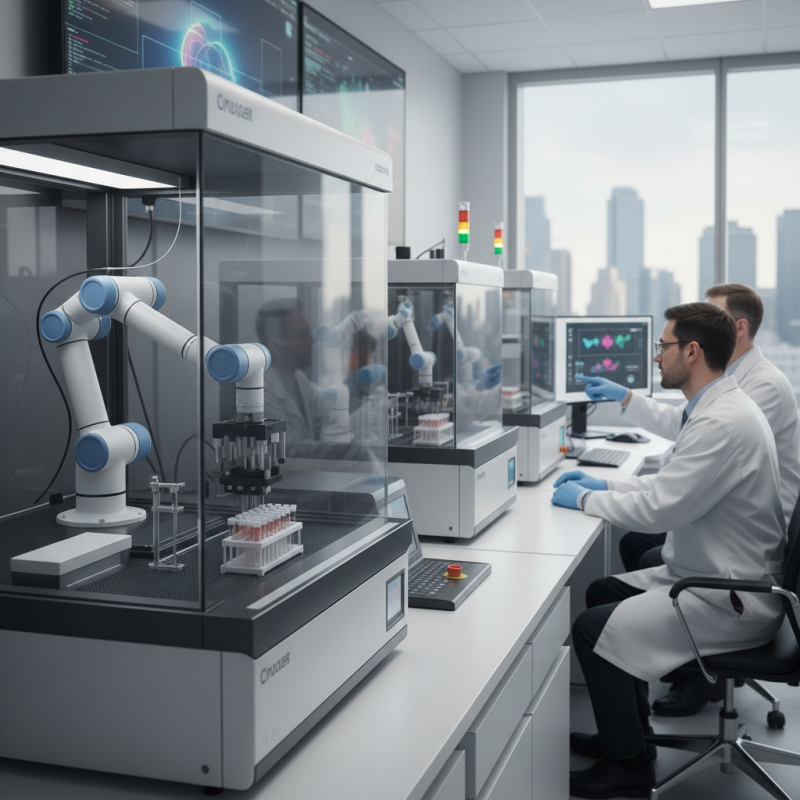
Automated laboratory instruments have transformed modern scientific research and clinical diagnostics. These instruments include robotic systems, liquid handling devices, and analytical machinery, fundamentally changing how laboratories operate. A study by MarketsandMarkets indicates that the global market for laboratory automation is projected to reach $6.6 billion by 2025, reflecting a growing trend in the industry.
The shift towards automation helps reduce human error, a significant concern in laboratory settings. Human mistakes in sample handling can lead to inaccurate results and compromised studies. For example, automated pipetting systems can dispense fluids with precision, ensuring consistent volumes across tests. According to research from the National Institutes of Health, automated systems can reduce errors in sample preparation by up to 50%. This technology not only enhances accuracy but also streamlines workflows, allowing scientists to focus on analysis rather than repetitive tasks.
Yet, reliance on automated instruments is not without challenges. Calibration and maintenance of these systems require skilled technicians. A report from the Laboratory Tools Association suggests that improper setup or neglect can lead to unreliable results. Therefore, laboratories must invest in ongoing training and quality control measures, balancing the benefits of automation with the necessity for human oversight. This reflective approach ensures that the advantages of reduced human error do not come at the expense of overall reliability.
| Instrument Type | Functionality | Benefits | Common Applications |
|---|---|---|---|
| Automated Pipettes | Accurate liquid handling and transfer | Reduces risk of pipetting errors, increases throughput | Molecular biology, biochemistry |
| Automated Samplers | Collects samples from various sources automatically | Enhances consistency and accuracy of sample collection | Environmental testing, clinical diagnostics |
| Automated Analyzers | Analyzes chemical and biological samples | Increases speed of analysis and reduces human judgment errors | Clinical laboratories, pharmaceutical testing |
| Automated DNA Sequencers | Sequences DNA with high precision | Minimizes manual errors and increases sequencing speed | Genomics, personalized medicine |
| Robotic Laboratory Systems | Integrates multiple laboratory functions into one unit | Reduces manual handling and optimizes workflow | High-throughput screening, combinatorial chemistry |
: Automated laboratory instruments include robotic systems, liquid handling devices, and analytical machines.
They precisely handle samples, which minimizes mistakes in measurements and sample preparation.
The global laboratory automation market is expected to reach $6.6 billion by 2025.
Maintenance and calibration require skilled technicians to ensure reliable results.
It allows for simultaneous analyses, speeding up sample processing and discovery timelines.
Automated systems may misinterpret data, needing human review to confirm accuracy.
Proper training ensures that systems perform well and mitigate underperformance risks.
Automated systems improve traceability and minimize paperwork, enhancing efficiency.
No, laboratories need a balance between automation and expert critical thinking.
Continuous training and quality control measures are essential for maintaining reliability.
Automated laboratory instruments are revolutionizing the way laboratories operate by significantly reducing human error. By performing tasks with precision and consistency, these instruments minimize the risks associated with manual operations, such as miscalculations and sample contamination. Common human errors in laboratory settings often result from fatigue, lack of training, and inconsistency in techniques. However, the mechanisms of error reduction in automation, including standardized protocols and real-time monitoring, ensure reliability and accuracy in experimental results.
How do automated laboratory instruments reduce human error? They employ advanced technologies that streamline processes, allowing for faster and more accurate data collection and analysis. Beyond minimizing errors, automation also brings additional benefits, such as increased throughput, improved safety standards, and enhanced reproducibility of experiments. Overall, the integration of automated laboratory instruments not only enhances the quality of scientific research but also fosters a more efficient and safe working environment.
