Gray Medical
Digital imaging is revolutionizing the field of radiology. Many healthcare providers are asking, "Why is digital imaging replacing traditional X-ray film?" The shift towards digital solutions brings numerous advantages. Digital images provide clearer and more detailed visuals. This clarity allows for better diagnosis and treatment planning.
Moreover, digital imaging systems are more efficient. They eliminate the need for chemical processing. This speeds up the workflow in busy medical facilities. Physicians can immediately access and share images, improving collaboration on patient care.
However, transitioning to digital systems can be challenging. Initial costs and training staff pose hurdles for some institutions. There is also a learning curve for radiologists accustomed to film. As technology continues to evolve, it is critical for providers to adapt. Addressing these challenges will help maximize the benefits of digital imaging in healthcare.
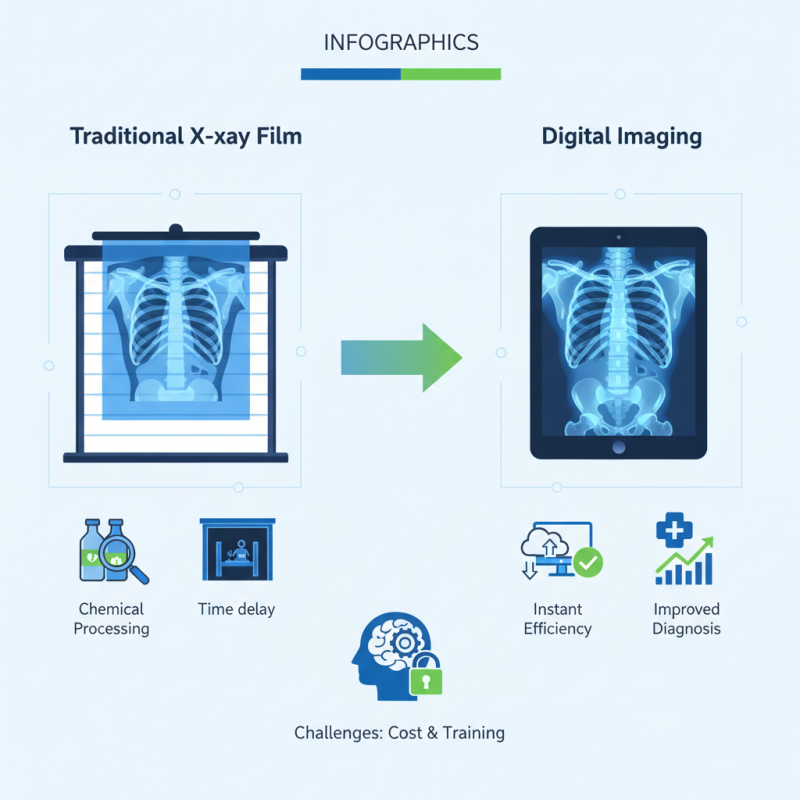
The advancement of medical imaging technologies has changed how healthcare professionals diagnose and treat patients. Digital imaging has emerged as a powerful alternative to traditional X-ray film. One major advantage is the ability to store and retrieve images electronically. This process reduces the risk of losing valuable patient data.
Digital imaging provides clearer images, offering more detail than traditional methods. This clarity enhances diagnostic accuracy, aiding radiologists in identifying healthcare issues. However, reliance on technology means that professionals must stay updated with ongoing changes in imaging technology. Continuous education is crucial.
Tips for professionals: Embrace ongoing training in digital imaging techniques. Familiarize yourself with software and equipment updates. Collaboration with tech specialists can enhance your imaging practices. Always seek feedback on image quality to improve your skills. Reflection on past imaging decisions can offer insights into future improvements.
Traditional X-ray film has been a staple in medical imaging for decades. However, it comes with several limitations. First, the processing time can be lengthy. After exposure, film needs to be developed in darkrooms, which delays diagnosis and treatment. This requirement can impact patient care, especially in emergencies. Moreover, the film's sensitivity to light can lead to underexposed images, compromising the quality of information available to healthcare providers.
Another significant drawback is the physical space needed for storage. Traditional X-ray films require substantial space for filing and preservation. They can deteriorate over time, leading to loss of critical data. This poses a risk, particularly for long-term patient records. Additionally, searching through physical files can be time-consuming, further delaying critical decision-making.
While traditional methods have their place, digital imaging offers immediate access and improved storage solutions. Digital files can be shared easily among healthcare professionals, facilitating better collaboration. Nevertheless, some practitioners may feel hesitant to fully transition from traditional film due to the learning curve associated with new technologies. This hesitation reflects a challenge that needs addressing for seamless integration into modern healthcare systems.
Digital imaging is revolutionizing healthcare. Its advantages over traditional X-ray film are numerous. For instance, digital images can be viewed instantly. This feature speeds up diagnosis and treatment. In emergency situations, every second counts.
Costs are another benefit. Digital systems reduce the need for physical film and chemicals. They also save money on storage space. Digital images can be easily stored and shared, enhancing collaboration between healthcare professionals. This efficiency improves patient care.
However, transitioning poses challenges. Training staff on digital systems is essential but time-consuming. Some might not fully embrace new technology. Encouraging a culture of openness to learning is crucial.
Tip: Regular training sessions can ease the transition.
Additionally, ensure all devices are up-to-date. Performing regular maintenance can prevent technical issues. It's a reminder that technology, though beneficial, requires ongoing attention.
Tip: Schedule routine checks for your imaging equipment.
By acknowledging these challenges, healthcare providers can better adapt to digital imaging. Embracing this change is key to improving patient outcomes.
Digital imaging is revolutionizing patient care and diagnosis in the medical field. The shift from traditional X-ray film to digital systems offers numerous advantages. According to the Radiological Society of North America, over 90% of hospitals in the U.S. have adopted digital X-ray technology. This widespread adoption reflects significant improvements in image quality and ease of use.
Digital imaging enhances diagnostic accuracy. Physicians can view images instantly, reducing turnaround times for diagnoses. A study in the Journal of Digital Imaging found that digital X-rays improved diagnostic confidence by 30%. Faster and more precise diagnostics can lead to better patient outcomes. However, it's important to consider the potential for over-reliance on technology. Challenges still exist, including the need for proper training and potential equipment malfunctions.
Furthermore, digital imaging streamlines the patient experience. Patients benefit from less exposure to radiation, with digital systems requiring lower doses than film. Yet, healthcare providers must also be mindful of data security risks. Protecting patient information is crucial as digital records become the norm. Balancing innovation with these challenges is vital for maximizing the benefits of digital imaging in patient care.
Digital imaging is revolutionizing the medical field. It offers clearer images and quicker diagnostics. Radiologists can analyze scans in real-time. This efficiency can lead to better patient outcomes.
Traditional film has limitations. It requires extensive processing time. Images degrade over time, making it difficult to retrieve old records. With digital imaging, records are easily stored and shared. Doctors can access important data from anywhere. This connectivity improves collaborative care.
Despite its advantages, digital imaging is not without flaws. Initial costs for equipment can be high. There is also the challenge of data security. Cyber threats to medical records are a growing concern. Striking a balance between innovation and privacy remains essential. As technology advances, we must address these issues carefully.
: Digital imaging provides clearer images and allows for electronic storage, reducing the risk of losing data.
It offers more detail in images, aiding radiologists in identifying healthcare issues more effectively.
They should engage in ongoing training and familiarize themselves with updates in software and equipment.
Working with tech specialists can help enhance imaging techniques and overall quality of care.
Cyber threats are a concern, so balancing innovation with privacy is essential for protecting medical records.
The initial investment for digital imaging equipment can be high, which may deter some facilities from adopting it.
It allows radiologists to make quicker decisions, often leading to better health outcomes for patients.
Yes, digital records can be stored and retrieved easily, unlike traditional film that degrades over time.
Reflecting on previous choices can identify areas for improvement in future imaging practices.
Over-reliance on technology may require continuous education and can pose risks related to data privacy.
The article "Why is Digital Imaging Taking Over Traditional X-ray Film?" explores the significant shift in medical imaging technologies over recent years. It details the evolution of imaging from traditional X-ray film to advanced digital systems, highlighting the limitations of film, such as longer processing times and lower image quality. The advantages of digital imaging, including immediate access to images, enhanced diagnostic capabilities, and improved patient care, are extensively discussed.
Furthermore, the article examines the profound impact that digital imaging has on patient care and diagnosis, noting how it facilitates better clinical decision-making and reduces the risk of human error. As the field continues to evolve, the future trends in medical imaging suggest an ongoing replacement of traditional methods, ultimately reinforcing the question: "Why is digital imaging replacing traditional X-ray film?" The transition represents not just a technological advancement but a significant move toward more efficient and effective healthcare delivery.
