What Is Ergonomic Design in Medical Furniture?

Time:2026-10-18 Author:Oliver
0%

What Is Ergonomic Design in Medical Furniture?

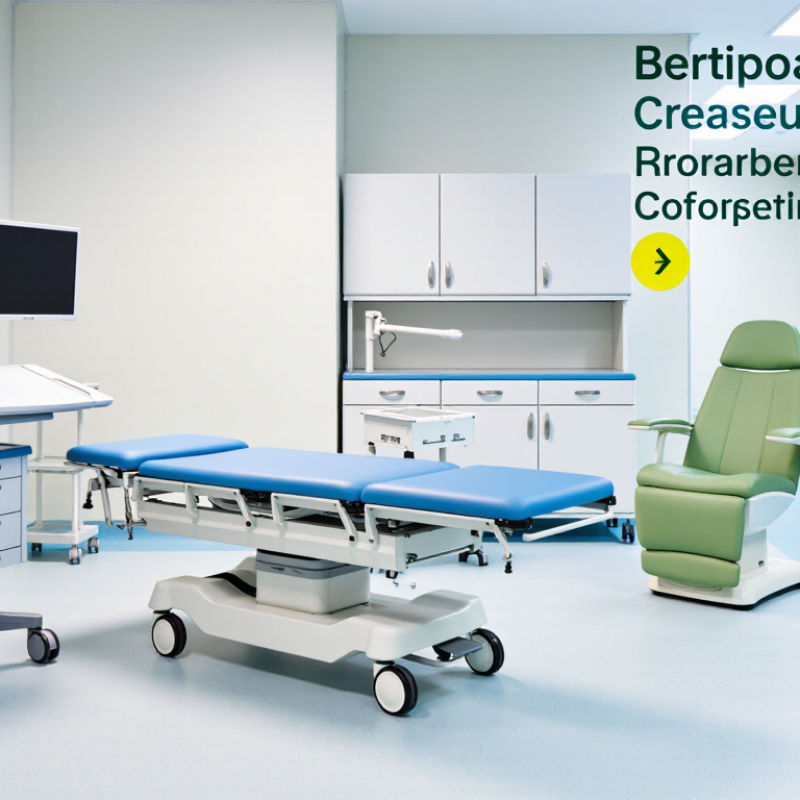
Medical furniture is not merely equipment placed beside a bed. It shapes how clinicians move, how patients feel, and how safely care is delivered. Ergonomic design adapts furniture to real human bodies and demanding clinical routines. Adjustable examination tables, supportive treatment chairs, height-flexible workstations, and easy-grip controls can reduce awkward reaching. They can also make transfers calmer and more predictable.

What are the benefits of ergonomic design in medical furniture? The answer begins with reduced physical strain. A nurse should not repeatedly bend to reach a low supply shelf. A patient should not struggle to climb onto an examination table. Correct height, stable support, clear controls, and suitable cushioning can improve comfort and workflow. These details may help limit fatigue and support safer patient handling, although furniture alone cannot prevent every injury.

Ergonomist Dr. Alan Hedge is widely associated with this practical principle: “Ergonomics is the science of fitting the task to the user, not the user to the task.” His words reflect the central design question. Who uses this furniture, and under what pressure? A busy clinic may need fast adjustments and surfaces that clean easily. A rehabilitation room may require stronger lateral support and safer transfer space. No chair solves every problem. Poor training, limited room, or incorrect setup can weaken good design. Therefore, responsible evaluation should include clinicians, patients, infection-control staff, and maintenance teams. Real observations matter more than attractive specifications.
What Is Ergonomic Design in Medical Furniture?

Definition and Core Principles of Ergonomic Design in Medical Furniture

Ergonomic design in medical furniture means fitting equipment to human movement, strength, and clinical tasks. It reduces unnecessary reaching, twisting, pressure, and static posture. The goal is not simply a softer chair. It is safer interaction between patients, clinicians, caregivers, and furniture.

Core principles include adjustability, support, accessibility, and cleanability. An examination table should lower enough for safe patient access, then rise smoothly for clinical work. Armrests should support transfer without blocking movement. Rounded edges, stable casters, and easy-to-operate controls also reduce avoidable strain. The World Health Organization and International Labour Organization estimated 1.9 million work-related deaths globally in 2016. Their findings reinforce a practical point: workplace design affects health over time. In healthcare, that impact can appear through repeated lifting, awkward positioning, and long periods of standing.

Evidence should guide specifications, but evidence does not replace observation. NIOSH identifies patient handling as a major contributor to musculoskeletal injuries among healthcare workers. Designers should watch real transfers, not only review drawings. A nurse may need one-handed controls while supporting a patient. A wheelchair user may require clearer knee space than a standard measurement suggests. Infection-control requirements also matter; seams, exposed mechanisms, and difficult-to-clean surfaces can undermine otherwise thoughtful design.

No single dimension suits every body. That is the difficult part. A technically compliant product can still feel unsafe in practice. User trials, maintenance feedback, and periodic redesign are therefore essential. Ergonomics is a continuing process, not a finished label.

What Is Ergonomic Design in Medical Furniture?

Ergonomic design adapts medical furniture to human body dimensions, movement, and clinical tasks. Core principles include adjustability, neutral posture, adequate support, accessibility, safe transfers, and easy cleaning. The chart shows selected accessibility dimensions that support inclusive medical furniture layouts.

Reference values are based on the 2010 ADA Standards for Accessible Design and are shown in inches. They provide accessibility benchmarks, not a complete ergonomic specification for every medical application.

How Ergonomic Medical Furniture Supports Patients and Healthcare Workers

What Is Ergonomic Design in Medical Furniture?

How Ergonomic Medical Furniture Supports Patients and Healthcare Workers

Ergonomic medical furniture fits the body, the task, and the clinical setting. In a busy examination room, an adjustable table can reduce awkward lifting. A patient can step onto it more safely. A nurse can position the surface without bending repeatedly. Small changes matter. They may reduce strain during long shifts.

For patients, support begins with comfort and stability. Contoured backrests, firm arm supports, and low entry heights can ease transfers. Adjustable head sections also help patients maintain safer positions during examinations. Clear controls give staff better control. Smooth, sealed surfaces support practical cleaning between appointments. However, comfort should not replace clinical function or infection-control requirements. Furniture needs careful assessment, not attractive features alone.

Healthcare workers benefit when equipment moves with less force. Height adjustment can keep shoulders relaxed during wound care or routine assessments. Locking casters can improve stability during transfers. A well-placed foot control may prevent unnecessary twisting. In practice, even well-designed furniture has limits. A tall worker and a smaller worker may need different settings. Staff training remains essential. I have noticed that teams sometimes ignore adjustments when schedules become crowded. That habit weakens the value of ergonomic design. Regular checks, user feedback, and maintenance help furniture remain safe, usable, and responsive to real clinical work.

Key Features of Ergonomic Medical Furniture

Ergonomic design in medical furniture supports safe, comfortable, and efficient care. It considers the patient, the clinician, and the tasks performed around the furniture. Key features include adjustable height, stable support, easy movement, and controls that users can understand quickly. These details matter during examinations, transfers, procedures, and long periods of seated care.

Adjustable backrests and leg supports help accommodate different body sizes and clinical positions. Firm cushions can reduce pressure, while softer surfaces may improve comfort during recovery. However, comfort alone is not enough. Furniture should also provide clear access for staff, rounded edges, secure locking systems, and surfaces that tolerate frequent cleaning. Smooth, non-porous materials can reduce dirt collection around seams and joints. Wheels should move quietly and lock firmly when needed.

Good ergonomic furniture also respects real clinical routines. Foot pedals, handles, and adjustment controls should be reachable without awkward bending. Weight capacity and stability require careful review, especially during patient transfers. No design fits every body. That is easy to forget. In practice, staff feedback and patient observation often reveal problems that specifications miss. A chair may look efficient but still create shoulder strain after repeated use. Regular evaluation, maintenance checks, and user training help keep ergonomic features effective over time.

Applications Across Hospitals, Clinics, and Care Facilities

What Is Ergonomic Design in Medical Furniture?

Ergonomic medical furniture supports safer movement for patients and caregivers. In hospitals, adjustable beds can reduce awkward bending during transfers, examinations, and repositioning. Clear controls matter. A tired nurse should not search for a hidden button beside a sleeping patient.

The U.S. Bureau of Labor Statistics reported that musculoskeletal disorders represented 27% of workplace injury and illness cases requiring days away from work in 2023. This figure covers many industries, yet it highlights a serious healthcare concern. NIOSH identifies patient handling as a major source of occupational strain. Hospitals therefore need beds, stretchers, and treatment chairs that adjust smoothly, lock securely, and leave enough clearance for lifting equipment. Small details become physical protection.

Clinics often face tighter rooms and faster appointments. Height-adjustable examination tables can help clinicians work with a more neutral posture. Rounded edges, stable steps, and easy-clean upholstery also support safer daily routines. In long-term care facilities, chairs with supportive armrests and controlled recline can assist residents during sitting and standing. The design should respect ability, not assume it.

Real use reveals flaws. A control panel may be technically accessible but confusing under pressure. A chair may look comfortable while creating pressure behind the knees. Staff trials, patient feedback, and maintenance records should guide revisions. The World Health Organization’s 2021 report on health and care workers also emphasizes protecting the healthcare workforce. Ergonomics is not a decorative feature. It is an operational responsibility.

Standards, Safety Factors, and Future Developments in Ergonomic Design

What Is Ergonomic Design in Medical Furniture?

Ergonomic medical furniture supports safe movement, clear access, and lower physical strain. ISO 6385:2016 recommends designing work systems around human capabilities and limitations. In practice, this means an examination table should adjust smoothly, support neutral posture, and leave enough legroom for clinicians. A firm edge can help reposition a patient. It can also create pressure during longer procedures.

Safety depends on more than comfort. IEC 60601-1 addresses basic safety and essential performance for applicable medical electrical equipment. ISO 14971:2019 requires a structured approach to identifying and controlling device risks. Designers should examine pinch points, unstable casters, transfer heights, maximum loads, and cleaning access. The World Health Organization estimates that 1.71 billion people live with musculoskeletal conditions worldwide. That figure makes staff handling and patient transfers important design concerns, not cosmetic features. Small details matter.

Future furniture may use sensors to detect unsafe loading, uneven positioning, or repeated awkward movements. Data could guide maintenance and workplace redesign, but automated feedback must be validated carefully. Privacy also needs attention when furniture records patient-related activity. The U.S. Bureau of Labor Statistics continues to report substantial occupational injury exposure in healthcare and social assistance, especially during patient handling tasks. Better furniture may reduce risk, but it cannot replace training, staffing, or thoughtful room layouts. One weakness remains: many ergonomic standards offer principles rather than one universal dimension. Human bodies vary. A “standard” fit may still feel wrong.

What Is Ergonomic Design in Medical Furniture? - Standards, Safety Factors, and Future Developments in Ergonomic Design

Note: The dimensional values marked as design targets are practical reference ranges, not universal legal requirements. Final specifications should be validated against the intended user population, task, risk assessment, and applicable local regulations.
Design Dimension Ergonomic Data or Design Target Relevant Standard or Basis Primary Safety Concern Recommended Verification
User Anthropometry Design for a broad user range, typically from approximately the 5th-percentile female to the 95th-percentile male, unless the product is intended for a defined population. ISO 15535 provides general principles for establishing and using anthropometric databases. Poor population fit can cause pressure points, overreaching, unstable posture, and transfer injuries. Use validated anthropometric data and test prototypes with representative users.
Seat Height A practical adjustable reference range for many clinical seating applications is approximately 400–520 mm from floor to compressed seat surface. The exact value depends on user stature, footwear, transfer needs, and task height. ISO 6385 supports designing around human characteristics and task demands. Excessive height can leave feet unsupported; excessive low height can increase knee and hip loading during rising. Measure the adjustment range under rated load and confirm stable foot support in user trials.
Seat Depth A reference range of approximately 400–450 mm can accommodate many adult users when combined with suitable back support and a rounded front edge. Anthropometric fit and task-specific user testing are required; no single depth is suitable for every clinical population. Excessive depth may compress the back of the knees and prevent contact with the backrest. Check the gap between the seat edge and the user’s knee area and assess posture during the full task cycle.
Seat Width and Clearance A clear usable seat width of at least approximately 450 mm is a common design reference for general adult seating; larger or specialized seating may be required for specific populations. Final dimensions should be based on hip breadth data, clothing, lateral supports, and transfer requirements. Insufficient width can create lateral pressure and restrict repositioning or assisted transfers. Measure usable—not nominal—width, including armrests, side supports, upholstery compression, and accessories.
Backrest and Lumbar Support Provide continuous back support with adjustable recline or positioning where the task requires prolonged sitting. Avoid rigid edges and localized pressure zones. ISO 11226 addresses evaluation of static working postures; ISO 6385 emphasizes matching equipment to human capabilities. Unsupported or constrained spinal posture may increase discomfort and fatigue. Assess trunk angle, contact pressure, reach demands, and comfort during representative clinical tasks.
Armrests and Side Supports Armrests should support the forearms without elevating the shoulders and should not obstruct lateral transfers. Adjustable height and removable designs improve adaptability. Design should reflect task posture, user anthropometry, and safe patient-handling procedures. Fixed or poorly positioned supports can interfere with transfers and increase shoulder loading. Test entry, exit, lateral transfer, cleaning access, and caregiver access with the supports installed.
Working Surface Height For mixed sitting and standing tasks, use adjustable surfaces. A practical design range may be approximately 680–1100 mm, but task-specific heights can fall outside this range. ISO 6385 and ISO 11226 support posture-based evaluation rather than a single universal height. Incorrect height can produce sustained shoulder elevation, wrist deviation, or forward trunk flexion. Evaluate elbow angle, viewing distance, reach frequency, and posture for both shorter and taller users.
Reach Zone Frequently used controls, supplies, and accessories should be positioned within easy arm reach; less frequently used items may be placed farther away if they can be accessed without unsafe trunk bending or twisting. Reach limits should be determined from the intended user population and task frequency; ISO 11226 is relevant to posture assessment. Repeated extended reaching may increase shoulder and back strain. Map primary and secondary reach zones and observe high-frequency activities under realistic workload conditions.
Transfer and Entry Clearance Provide unobstructed access for the user, caregiver, mobility aid, and transfer equipment where applicable. Clearance must be determined by the intended transfer method. Accessibility requirements vary by jurisdiction and facility type; user-handling risk assessment is essential. Restricted access can increase fall, collision, and caregiver musculoskeletal risks. Conduct transfer trials with trained users, mobility aids, and the required clinical accessories.
Stability and Tip Resistance The furniture should remain stable during normal loading, repositioning, reclining, transfer, and foreseeable misuse. A low center of gravity and an appropriately wide support footprint improve stability. Applicable product safety standards and risk-management procedures determine the required test conditions. Tipping or unexpected movement can cause falls, entrapment, or equipment damage. Perform static stability, dynamic loading, braking, and foreseeable misuse tests using the maximum rated configuration.
Casters, Brakes, and Locking Mechanisms Casters should roll predictably on the intended floor surface; brakes and locks should be easy to identify, operate, and verify without awkward posture. Requirements depend on product type, clinical use, load, and applicable safety standards. Uncontrolled movement can cause falls, collisions, or unintended separation from equipment. Test rolling resistance, brake holding force, wear, floor transitions, and operation with gloves.
Controls and Adjustment Forces Controls should be reachable, clearly labeled, operable with gloved hands where required, and protected against accidental activation. ISO 6385 supports designing controls around human capabilities; electrical adjustment systems may require additional medical electrical equipment evaluation. High operating forces or unclear controls can cause overexertion, errors, or unintended movement. Measure operating force, activation distance, visibility, labeling, and accidental-activation resistance.
Pressure, Edges, and Pinch Points Use rounded, continuous edges and minimize hard contact zones. Moving parts should include guards or safe clearances to reduce finger and limb entrapment. Product-specific mechanical safety requirements and risk assessment determine acceptable clearances and guarding. Sharp edges, shear points, and concentrated pressure can cause injury or tissue damage. Inspect accessible surfaces, test moving mechanisms, and assess contact pressure under the maximum intended load.
Cleanability and Infection-Control Support Use sealed, non-absorbent, low-crevice surfaces that tolerate the facility’s approved cleaning and disinfection processes. Cleaning compatibility is determined by the healthcare facility’s infection-prevention protocol and the material manufacturer’s validated instructions. Material degradation or inaccessible soil traps may increase contamination risk. Conduct repeated cleaning-cycle tests and inspect seams, joints, fasteners, upholstery, and underside surfaces.
Manual Handling and Repositioning Reduce unnecessary lifting, pushing, pulling, and twisting. Provide accessible handles and use powered assistance when load, distance, or frequency creates significant risk. ISO 11228-1 addresses manual lifting and carrying principles; local occupational safety requirements may add specific limits. High forces and awkward postures may contribute to caregiver musculoskeletal injury. Measure push and pull forces on the actual floor surface and evaluate peak force, sustained force, distance, and frequency.
Electrical and Powered Adjustments Powered functions should include controlled motion, overload protection, clear status indication, safe cable routing, and a dependable stop function. IEC 60601-1 may apply when the product is medical electrical equipment or forms part of such equipment; applicability must be determined by classification. Electrical faults, unexpected movement, or cable damage may cause shock, fire, collision, or falls. Complete electrical safety, mechanical safety, software/control, and electromagnetic compatibility evaluations where applicable.
Risk Management Identify hazards across normal use, cleaning, maintenance, transport, foreseeable misuse, and end-of-life conditions. ISO 14971 is relevant when the furniture is within the scope of a medical-device risk-management process. Unidentified use errors and combined hazards may remain after individual component tests pass. Maintain a documented hazard analysis, risk controls, verification evidence, residual-risk review, and post-market feedback process.
Future Ergonomic Developments Expected developments include sensor-assisted posture feedback, adaptive adjustment, digital anthropometric modeling, predictive maintenance, lower-force mechanisms, modular accessories, and more inclusive designs for aging and disabled users. Future features should remain subordinate to human factors, privacy, cybersecurity, reliability, accessibility, and documented clinical benefit. Automation can introduce new risks, including incorrect sensing, alert fatigue, privacy exposure, and loss of user control. Validate technology with diverse users, measure outcomes beyond comfort, and provide manual overrides, transparent alerts, and safe failure modes.

FAQS

What does ergonomic medical furniture mean?

It fits the patient, the worker, and the clinical task. Adjustable height can reduce bending during examinations. Small changes matter.

How can ergonomic furniture help patients?

Low entry heights, firm arm supports, and contoured backrests can make transfers steadier. Adjustable head sections support safer examination positions. Comfort alone is insufficient.

How does it support healthcare workers?

Height adjustment can keep shoulders more relaxed during wound care. Foot controls may reduce repeated twisting. Staff training remains essential.

Which features are especially useful?

Clear controls, locking casters, rounded edges, and reachable handles improve daily use. Sealed surfaces support cleaning between appointments. Wheels should lock firmly.

Is comfort the main design goal?

No. Furniture must also support stability, cleaning, safe access, and clinical function. A soft cushion may feel pleasant but provide poor support.

What safety details should teams check?

Teams should inspect pinch points, maximum loads, transfer heights, unstable casters, and cleaning access. Loose locks deserve immediate attention. Small defects can matter.

Can one design fit every patient and worker?

No. A tall worker and a shorter worker may need different settings. A “standard” position may still feel wrong. Bodies vary.

Can future furniture use sensors?

Sensors may detect uneven loading or repeated awkward movements. Their feedback needs careful testing. Privacy also needs protection.

What limits ergonomic furniture in real workplaces?

Furniture cannot replace training, adequate staffing, or sensible room layouts. Busy teams may skip adjustments. That weakens the design’s value.

How can facilities maintain ergonomic benefits?

Staff should report discomfort, check moving parts, and review settings regularly. Patient observation can reveal hidden problems. Specifications may miss real strain.

Conclusion

Ergonomic design in medical furniture focuses on creating equipment that supports natural body movement, comfort, safety, and efficient care. It considers the different physical needs of patients and healthcare workers by improving posture, reducing strain, and making essential tasks easier to perform. Adjustable heights, supportive surfaces, accessible controls, stable structures, smooth movement, and easy-to-clean materials are important features. What are the benefits of ergonomic design in medical furniture? It can help patients feel more secure and comfortable while reducing fatigue, lifting injuries, and work-related discomfort among medical staff.

Ergonomic furniture can be used across hospitals, clinics, rehabilitation centers, examination rooms, and long-term care facilities. Its design should support safe transfers, appropriate positioning, infection-control routines, and reliable daily operation. Careful attention to load capacity, stability, electrical safety, hygiene, and user accessibility is essential. Future developments may include smarter adjustment systems, personalized support, sensor-based monitoring, and more sustainable materials, while maintaining practical usability and patient-centered care.

Oliver

Oliver

Oliver is a seasoned marketing professional with a wealth of expertise in driving brand awareness and engagement. With a deep understanding of our company's product offerings, he consistently delivers high-quality content that enriches our professional blog. His insights not only shed light on......