Gray Medical
Europe remains one of the world’s most important medical technology markets. MedTech Europe’s 2024 industry report estimates approximately 800,000 direct employees and 15,000 medical technology companies across Europe. Around 90% are small or medium-sized enterprises. That scale creates opportunity for qualified Chinese manufacturers, but market access is not simply a shipping exercise.
So, how to import medical devices from China to the European market? The answer begins with classification, not freight costs. Under Regulation (EU) 2017/745, a product may require risk classification, technical documentation, clinical evidence, and conformity assessment. Higher-risk devices often need review by an EU notified body before CE marking. Importers must also verify the manufacturer, retain declarations, check device labels, and cooperate with post-market surveillance.
Small details matter. A missing EU authorised representative address can delay customs clearance. An incomplete English instruction manual can trigger a compliance question. Packaging, UDI data, certificates, and batch records must tell the same story.
The European Commission’s MDR implementation materials show that regulatory responsibilities extend beyond manufacturers. Importers and distributors have defined obligations. EUDAMED registration and vigilance requirements may also affect the launch timetable, depending on the device and applicable transition rules. These rules continue to evolve.
The WHO Global Model Regulatory Framework for Medical Devices supports a risk-based approach to safety and performance. That principle is practical. It protects patients and reduces avoidable commercial surprises.
Yet every project contains uncertainty. Certification timelines vary. Costs change. A supplier’s previous export success does not prove EU readiness. This guide offers a structured route, while encouraging professional legal and regulatory review before purchase orders are signed.
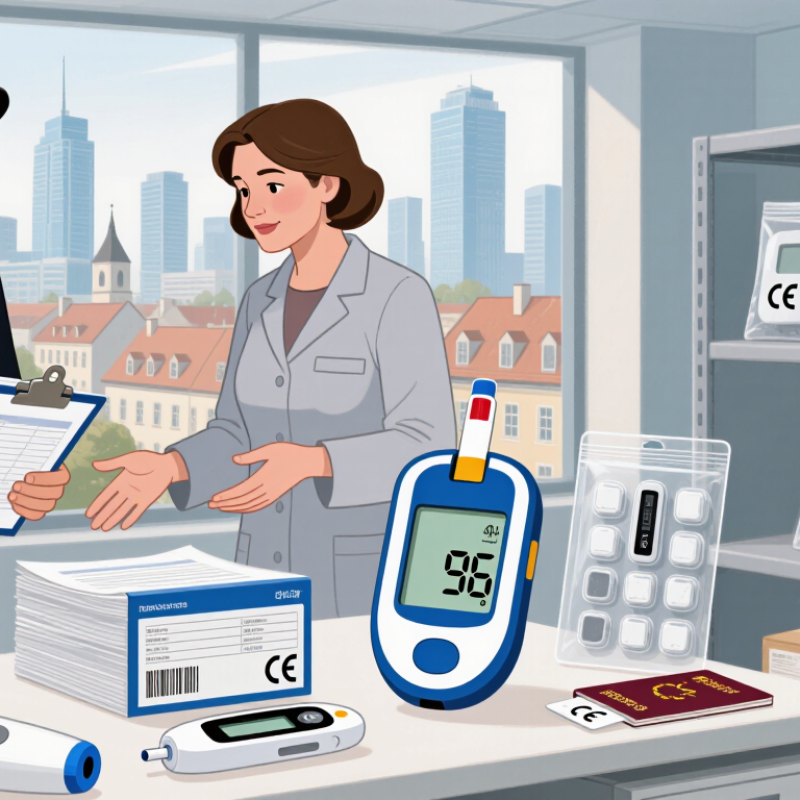
Importing medical devices from China to Europe starts with defining the destination market. The European Union is not one simple checklist. Each device needs a clear classification under Regulation (EU) 2017/745 or Regulation (EU) 2017/746. Risk class affects clinical evidence, conformity assessment, and notified-body involvement. A distributor’s opinion is not enough.
The non-EU manufacturer must appoint an EU-based authorised representative. The importer must verify the CE marking, EU Declaration of Conformity, technical documentation access, labelling, and instructions for use. Importer details must appear on the device or packaging. Storage and transport conditions also matter. A temperature-sensitive device should arrive with recorded temperature data, not only a shipping promise. The importer must retain records, support traceability, and report suspected incidents through the required vigilance process. EUDAMED registration should be monitored as its modules become operational. The process remains easy to underestimate.
MedTech Europe’s 2024 Facts and Figures report estimates Europe’s medical technology market at approximately €170 billion and identifies tens of thousands of companies, many of them small and medium-sized enterprises. This scale does not reduce compliance pressure. It increases the need for disciplined supplier audits. ISO 13485 certification can provide useful quality evidence, but it does not replace European conformity assessment. Review the manufacturer’s clinical evaluation, post-market surveillance plan, and change-control history. Some documents may look complete while lacking device-specific evidence. That weakness should be challenged before customs clearance, not after a hospital complaint.
Verify the Chinese manufacturer before discussing price, shipping, or production schedules. Request its business license, manufacturing permits, quality certificates, and recent audit records. An ISO 13485 certificate helps, but it does not prove European compliance. Confirm the certificate’s scope, validity, and issuing organization.
Ask for a live factory video or arrange an independent on-site audit. Check incoming material records, calibration labels, batch traceability, complaint handling, and sterilization controls. Compare the legal manufacturer’s name across certificates, labels, test reports, and contracts. Small mismatches can create serious delays. A polished document is not enough.
Classify the device according to its intended purpose, duration of use, invasiveness, and risk. Under the European Medical Device Regulation, the classification rules can change because of software functions, accessories, or reusable components. Review the applicable rule in Annex VIII and document your reasoning. A non-EU manufacturer may also need an authorized representative in Europe, plus conformity assessment and technical documentation. Do not rely only on the supplier’s classification. I have seen teams accept “Class I” too quickly, then discover that a measuring function required stricter evidence. The honest answer is sometimes uncertain. Obtain an independent regulatory review before signing a purchase order. Keep samples, inspection photos, declarations, test reports, and communication records in one controlled file._requirements can change, so recheck official European guidance before market entry.
Importing a medical device from China into Europe starts with evidence, not shipping. Under the EU Medical Devices Regulation, determine the device classification before reviewing documents. Classification drives the conformity assessment route.
Ask the manufacturer for technical documentation covering design, intended purpose, risk management, clinical evaluation, labeling, and post-market surveillance. Include applicable testing records, such as biocompatibility, electrical safety, software security, or packaging validation. Not every test applies, and forcing unnecessary tests can create confusion. Technical files must match the actual device, including its model, accessories, materials, and software version.
Check the EU Declaration of Conformity carefully. It should identify the manufacturer, device, applicable legislation, standards, and conformity route. Where required, verify the notified body certificate and its scope. The manufacturer must appoint an EU authorized representative when established outside the Union. As an importer, verify the CE marking, UDI details, labeling, instructions, registration information, and storage conditions before placing products on the market. Keep controlled copies of all records, including translations.
A document folder can look complete and still contain contradictions. For example, the user manual may show a different device name than the certificate. Resolve these gaps before customs clearance. Maintain complaint, incident, and corrective-action procedures after delivery. Retain traceability records and cooperate with competent authorities when needed. Do not rely only on a supplier’s declaration; independent review can reveal missing clinical evidence or outdated test reports.
Importing medical devices from China into Europe requires more than a customs broker. The EU Medical Device Regulation (MDR) requires a risk-based classification, technical documentation, clinical evidence, and a valid Declaration of Conformity. Many higher-risk devices also need assessment by a notified body. A non-EU manufacturer must appoint an EU authorised representative. The European importer must verify these details before placing products on the market. Importer name and address must appear on the device, packaging, or accompanying document.
Customs preparation should match the registration strategy. The importer needs an EORI number, correct HS or TARIC classification, commercial invoice, packing list, transport documents, origin information, and accurate customs value. Import VAT and national procedures also require attention. Check which EUDAMED modules are legally applicable on the shipment date. Device registration rules may differ during transitional periods. MedTech Europe’s 2024 Facts & Figures reported a European medical technology market worth approximately €170 billion, showing the opportunity, but also the scale of regulatory competition.
Tips: Request the manufacturer’s technical file index, EU Declaration of Conformity, certificate, UDI details, and post-market surveillance plan before ordering. Keep sample labels and photographs. A spreadsheet can still miss a damaged symbol or outdated certificate. That is the uncomfortable part. Verify every document against the product version, not merely the supplier’s name. Importers must also maintain complaint, incident, storage, and recall records. Customs clearance does not prove regulatory compliance. It only permits the goods to cross the border.
Complete customs, registration, and importer requirements for placing medical devices on the European Union market.
The chart shows the MDR transitional end dates introduced by Regulation (EU) 2023/607 for eligible legacy devices. These dates apply only when the legal transition conditions are satisfied; they are not a substitute for product-specific regulatory assessment.
Regulatory reference: Regulation (EU) 2017/745, as amended by Regulation (EU) 2023/607.
Importing medical devices from China into the European Union requires more than arranging ocean freight. Before booking, verify the device’s classification, conformity assessment route, CE marking, EU Declaration of Conformity, and technical documentation. Under Regulation (EU) 2017/745, a non-EU manufacturer usually needs an EU authorized representative. The importer must confirm these details, retain records, and identify all economic operators. Customs invoices should match product names, quantities, and tariff information. Small errors can delay a container at the border.
Shipping controls should reflect the device’s risks. Use validated packaging for sterile or fragile products, and record temperature and humidity when required. Check seal numbers, lot codes, expiry dates, and carton damage at receipt. A warehouse photograph can support a later investigation. Do not release stock merely because the outer box looks clean. Staff need written checks, but practical training matters more than a signed attendance sheet.
Post-market duties continue after delivery. Maintain a complaint process, review incident signals, monitor distributor feedback, and report serious incidents through the applicable European system. Keep traceability from shipment to customer, including batch or serial data. Review the post-market surveillance plan when field evidence changes. In practice, teams sometimes collect data without analysing it. That is a weakness. Assign owners, deadlines, and escalation rules, then test them with a mock complaint. Requirements may vary by device class and destination.
Practical compliance and logistics framework for placing medical devices from a non-EU country on the European Union market.
| Import Stage | Key Dimension | Required Action or Data Point | Evidence or Document to Control | Primary Reference |
|---|---|---|---|---|
| 1. Product Scoping | Determine whether the product is a medical device | Confirm that the product meets the definition of a medical device under European Union rules. The intended purpose stated by the manufacturer is central to the assessment. | Product description, intended-purpose statement, claims review, instructions for use, product catalogue, and risk analysis. | Regulation (EU) 2017/745, Article 2 |
| 2. Product Classification | Assign the correct risk class | Classify the device as Class I, IIa, IIb, or III according to the applicable classification rules. Reusable surgical instruments and certain custom or special-purpose products may require separate assessment. | Classification rationale, applicable classification rules, intended use, duration of contact, invasiveness, and active-device characteristics. | Regulation (EU) 2017/745, Annex VIII |
| 3. Manufacturer Setup | Identify the legal manufacturer | Verify the legal manufacturer’s name, registered address, manufacturing location, quality-system responsibility, and control over design and production. A trading intermediary cannot replace the legal manufacturer unless it assumes the applicable legal obligations. | Manufacturer declaration, quality-management records, technical documentation ownership, and signed supply agreement. | Regulation (EU) 2017/745, Articles 10 and 11 |
| 4. EU Representation | Appoint an authorised representative when required | If the manufacturer is established outside the European Union, an authorised representative established in the Union is generally required. The representative’s details must appear on the product, packaging, or accompanying documentation as applicable. | Written mandate, authorised-representative details, responsibility matrix, and communication procedure for competent authorities. | Regulation (EU) 2017/745, Article 11 |
| 5. Conformity Assessment | Complete the applicable conformity assessment | Class I devices may follow the manufacturer’s self-declaration route when no additional sterile, measuring, or reusable-surgical-instrument condition applies. Higher-risk devices generally require the involvement of a notified body. | Conformity-assessment records, notified-body certificate where applicable, quality-management certificate where applicable, and Declaration of Conformity. | Regulation (EU) 2017/745, Articles 19 and 52; Annexes IX–XI |
| 6. Technical Compliance | Maintain complete technical documentation | Technical documentation should demonstrate safety and performance, including device description, design and manufacturing information, risk management, verification and validation, clinical evaluation, labelling, and post-market surveillance planning. | Technical documentation prepared in accordance with the applicable annex, risk-management file, clinical-evaluation report, test reports, and production controls. | Regulation (EU) 2017/745, Annexes II and III |
| 7. Clinical Evidence | Substantiate clinical safety and performance | Use suitable clinical data and a documented clinical evaluation to support the device’s intended purpose, safety, performance, and benefit-risk determination. Clinical investigations may be required when existing evidence is insufficient. | Clinical-evaluation plan and report, literature appraisal, equivalence assessment where justified, clinical-investigation records, and post-market clinical follow-up plan where applicable. | Regulation (EU) 2017/745, Articles 61–62; Annex XIV |
| 8. Labelling | Prepare compliant labels and instructions | Provide required information such as the device name, intended purpose, manufacturer details, authorised-representative details where applicable, lot or serial number, relevant warnings, storage conditions, and instructions for use. Language requirements depend on the Member State where the device is supplied. | Final artwork, label review, instructions for use, translation-control records, packaging specifications, and symbol justification. | Regulation (EU) 2017/745, Annex I, Section 23 |
| 9. CE Marking | Affix the CE marking correctly | Affix the CE marking only after the applicable conformity-assessment procedure has been completed. When a notified body is involved, its four-digit identification number accompanies the CE marking where required. | EU Declaration of Conformity, certificate where applicable, approved artwork, and traceability between the CE marking and the conformity assessment. | Regulation (EU) 2017/745, Article 20; Annex V |
| 10. Importer Qualification | Verify the importer’s legal responsibilities | The importer must verify that the device bears the CE marking, that the Declaration of Conformity is available, that the authorised representative is identified where required, and that labelling and UDI information are present where applicable. | Importer verification checklist, supplier qualification file, Declaration of Conformity, certificates, label samples, and written release procedure. | Regulation (EU) 2017/745, Articles 13 and 16 |
| 11. Shipping Preparation | Control customs and transport data | Use the correct customs classification, customs value, origin information, consignee and importer details, and transport documentation. The applicable customs duty and import VAT depend on the product classification and destination Member State. | Commercial invoice, packing list, transport document, customs declaration data, proof of origin where relevant, insurance documents, and temperature or handling records where required. | Union Customs Code; destination-country tax and customs rules |
| 12. UDI and Registration | Manage device identification and registration | Assign and maintain the applicable Unique Device Identifier information and complete the registrations required for the device, economic operators, and products as the relevant European database functionality and legal deadlines apply. | Basic UDI-DI, UDI-DI and UDI-PI records, device registration information, economic-operator details, and database submission evidence. | Regulation (EU) 2017/745, Articles 27–29; Annex VI |
| 13. Import Release | Perform arrival and release checks | Before placing the device on the Union market, confirm that documentation, labelling, packaging integrity, storage conditions, and traceability information remain compliant. Do not release products when there is reason to believe they are non-compliant. | Goods-in inspection, batch or serial-number records, nonconformity reports, quarantine procedure, release approval, and warehouse-condition logs. | Regulation (EU) 2017/745, Article 13 |
| 14. Distribution Controls | Preserve product conformity during storage and transport | Ensure that storage or transport conditions do not compromise compliance, safety, or performance. Maintain records that allow the device and relevant economic operators to be traced through the supply chain. | Storage specifications, environmental monitoring, transport qualification, inventory records, batch or serial-number traceability, and distributor agreements. | Regulation (EU) 2017/745, Articles 13–14 |
| 15. Complaint Handling | Operate a documented complaint process | Collect, investigate, evaluate, and trend complaints and feedback. Escalate suspected serious incidents and product nonconformities to the manufacturer and authorised representative without undue delay. | Complaint register, investigation records, trend reports, communication log, corrective-action records, and escalation criteria. | Regulation (EU) 2017/745, Articles 13, 14, and 83–86 |
| 16. Vigilance Reporting | Meet serious-incident reporting timelines | Manufacturers must report serious incidents through the applicable competent-authority process. The MDR reporting periods are generally two days for a serious public-health threat, ten days for death or unanticipated serious deterioration in health, and fifteen days for other serious incidents. | Incident assessment, initial report, follow-up report, corrective-action plan, safety notice, and communication with authorities and supply-chain partners. | Regulation (EU) 2017/745, Article 87 |
| 17. Corrective Actions | Manage field safety corrective actions | When a device presents an unacceptable risk, evaluate measures such as correction, replacement, withdrawal, recall, or a field safety notice. Actions should be documented, traceable, and proportionate to the risk. | Risk assessment, recall or withdrawal plan, field safety notice, affected-lot list, distribution records, effectiveness checks, and closure report. | Regulation (EU) 2017/745, Articles 89 and 90 |
| 18. Post-Market Surveillance | Maintain a risk-based PMS system | Operate a post-market surveillance system that gathers and analyses production, complaint, incident, literature, trend, and corrective-action data. Use the results to update risk management, clinical evaluation, and product documentation. | PMS plan, PMS report for Class I devices, periodic safety update report for applicable higher-risk classes, trend analysis, and management review records. | Regulation (EU) 2017/745, Articles 83–86; Annex III |
| 19. Record Retention | Retain compliance and traceability records | Manufacturers generally retain the Declaration of Conformity and technical documentation for at least ten years after the last device is placed on the market, or at least fifteen years for implantable devices. | Controlled technical file, Declaration of Conformity, certificates, PMS records, complaint files, distribution records, and change-control history. | Regulation (EU) 2017/745, Article 10(8) |
| 20. Change Management | Review changes before shipment | Assess changes to design, materials, software, manufacturing sites, suppliers, labels, intended purpose, or packaging before implementation. A significant change may require updated testing, technical documentation, clinical evaluation, or notified-body review. | Change request, regulatory-impact assessment, updated risk analysis, validation records, revised artwork, approval record, and customer notification where required. | Regulation (EU) 2017/745, Articles 10 and 52; applicable conformity-assessment procedure |
Compliance note: Requirements can vary according to device classification, intended purpose, sterilisation or measuring status, software functionality, destination Member State, customs classification, and the date on which the product is placed on the European Union market. Regulatory and customs obligations should be confirmed for each specific device and shipment.
Confirm its classification and conformity assessment route. Check technical documentation, conformity evidence, labeling, and registration details. Shipping comes later.
Request design records, intended purpose, risk management, clinical evaluation, and post-market surveillance documents. Include relevant safety and packaging tests. Not every test applies.
Match the documents with the actual device, accessories, materials, and software version. Compare the manual, certificate, and product label. Small contradictions matter.
It should identify the manufacturer, device, applicable legislation, standards, and conformity route. Check whether the named device matches the shipped product.
A manufacturer outside the European Union usually needs an EU authorized representative. Confirm the representative’s details and retain controlled records.
Match invoices with product names, quantities, and tariff information. Check seal numbers, lot codes, expiry dates, and carton damage. Photograph damaged packaging.
Use validated packaging for sterile or fragile products. Record temperature and humidity when required. Do not release stock because the outer carton looks clean.
Maintain complaint and incident procedures. Track shipments through batch or serial data. Review distributor feedback and escalate serious signals through the applicable system.
Assign owners, deadlines, and escalation rules. Run a mock complaint using one shipment record. Data collection alone is not enough. Teams can miss patterns.
Importing medical devices from China to Europe requires a structured approach that combines regulatory planning, supplier verification, documentation, and ongoing compliance. The key question is: “How to import medical devices from China to the European market?” First, identify the applicable European requirements, determine the device’s risk classification, and confirm whether conformity assessment by an appropriate third party is required. Carefully evaluate the Chinese manufacturer’s qualifications, quality management system, production capabilities, and product testing records before placing an order.
Next, prepare complete technical documentation, including product specifications, risk management information, clinical evidence where applicable, labeling, and instructions for use. Importers should also ensure that conformity evidence, declarations, authorized representation, and registration obligations are properly completed. Before shipment, verify customs procedures, tariff information, importer details, and required economic operator records. After the device enters Europe, maintain traceability, monitor complaints and incidents, cooperate with authorities when necessary, and fulfill post-market surveillance and corrective action duties throughout the product’s lifecycle.
