How to Source Portable Vet Instruments as Demand Grows?

Time:2026-10-23 Author:Madeline
0%

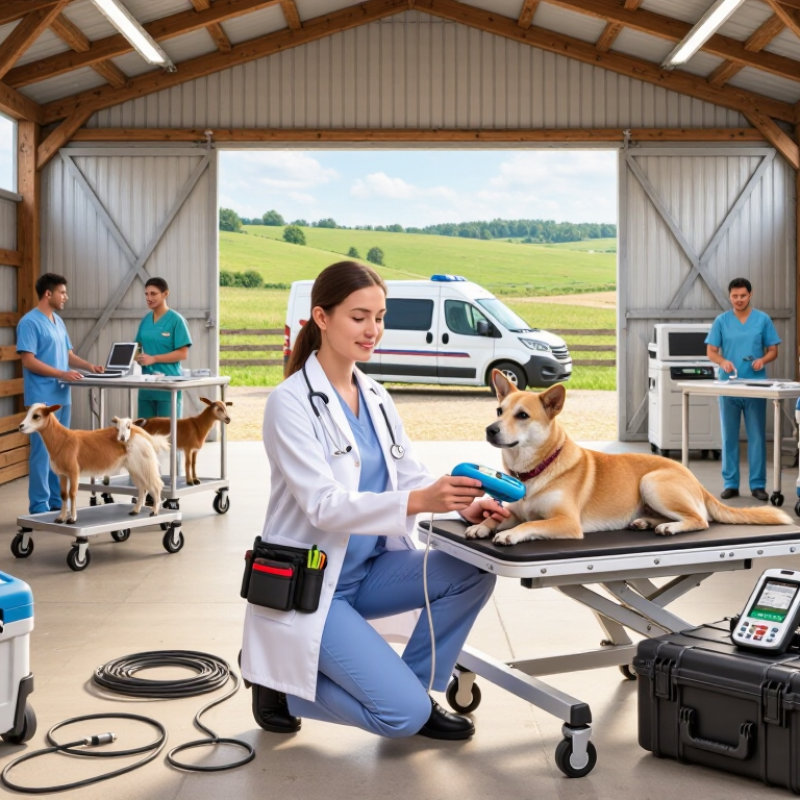
Why is the demand for portable veterinary instruments increasing? The answer begins with changing clinical realities. Veterinary teams now treat animals in farm buildings, shelters, mobile clinics, and crowded emergency rooms. A compact ultrasound scanner can move from one stall to another. A handheld blood analyzer can provide results beside a frightened dog, without delaying transport.

Dr. Daniel J. Fletcher, a veterinary emergency and critical care specialist, offers a useful principle: “Portable technology is valuable when it supports timely, sound clinical judgment.” This idea matters when sourcing equipment. Portability alone is not enough. Instruments must deliver consistent readings, withstand repeated cleaning, and operate with simple controls. Battery life also matters. A dead device is only expensive luggage.

Demand is rising because veterinarians need faster decisions outside traditional examination rooms. Rural practices may face long distances and limited laboratory access. Shelter teams may examine many animals within a single shift. Home-visit clinicians need tools that fit into a compact case. The trend is practical, not merely technological.

Still, the market has weaknesses. Some products promise advanced performance but provide limited training or unclear maintenance guidance. Buyers can overlook calibration, warranty support, and replacement parts. That mistake is understandable, but costly.

Reliable sourcing requires more than comparing prices. It requires checking clinical suitability, supplier experience, user feedback, and documentation. The best portable instrument is not always the smallest one. It is the one that remains accurate, usable, and supported when conditions become difficult.
How to Source Portable Vet Instruments as Demand Grows?

Defining the Portable Veterinary Instrument Requirements

How to Source Portable Vet Instruments as Demand Grows?

Defining the Portable Veterinary Instrument Requirements

Demand is expanding with pet ownership, mobile clinics, and rural veterinary services. The American Pet Products Association reported that United States pet industry spending reached $150.6 billion in 2024. This figure does not measure instrument demand directly, but it shows a larger care ecosystem.

Start with the clinical task, not the catalogue. A field veterinarian may need a compact otoscope, a reliable pulse oximeter, and a lightweight surgical set. Define the target species, procedure type, operating environment, and expected daily workload. A farm visit may require dust resistance. A small examination room may prioritize quiet operation and easy storage.

Weight matters. So does battery life.

The World Health Organization emphasizes equipment quality, maintenance, and user training in healthcare procurement guidance. Veterinary teams should apply the same discipline. Record measurement ranges, accuracy claims, sterilization compatibility, charging time, and replacement-part availability. Request test reports and user instructions before purchasing. Check whether calibration can be verified locally.

A portable instrument should survive transport, cleaning, and repeated handling. However, “portable” can hide compromises. Smaller displays may reduce readability, while low-cost batteries may fail during a long visit. I have found that procurement teams sometimes focus too heavily on purchase price. That is a mistake worth revisiting. Calculate the total ownership cost, including training, consumables, servicing, and downtime. The final specification should reflect real users, not only a spreadsheet.

Defining Portable Veterinary Instrument Requirements

As demand for mobile veterinary care grows, sourcing teams can compare instruments by portability, operating time, and field usability. The benchmarks below represent typical specifications for commonly used portable veterinary equipment.

How to read the chart: Lower weight improves transportability, while longer battery life supports farm visits, emergency response, and mobile clinics. Instruments should also be evaluated for durability, ease of disinfection, connectivity, and compatibility with local clinical workflows.

Assessing Suppliers, Certifications, and Product Quality

How to Source Portable Vet Instruments as Demand Grows?

A reliable supplier should provide more than a polished catalog. Request company registration details, manufacturing locations, quality procedures, and recent inspection records. Ask who performs final testing and how rejected units are handled. A clear answer matters. During supplier reviews, I would request a working sample, not only product photographs. Test battery life, screen readability, grip comfort, and performance beside a treatment table. Small faults become serious during a busy consultation.

Certification documents need careful checking. Ask for certificates covering the exact model, not a similar product family. Depending on the sales market, relevant conformity evidence may include CE marking, electrical safety reports, electromagnetic compatibility testing, or ISO 13485 quality management certification. These documents do not replace local regulatory checks. Verify certificate numbers, issuing bodies, validity dates, and product scope. A supplier avoiding direct verification deserves caution.

Product quality also depends on details users often overlook. Check calibration intervals, sensor accuracy, charging protection, cleaning instructions, and replacement-part availability. For instruments used near fluids, review ingress protection claims and material compatibility. Confirm whether software updates are controlled and recorded. Keep batch numbers and inspection notes. That creates useful traceability.

No supplier file is perfect. A checklist can still miss poor training or weak after-sales support. I would speak with current clinical users and ask about repairs after six months. One uncomfortable question helps: what commonly fails first? Their answer may reveal more than a sales presentation.

How to Source Portable Vet Instruments as Demand Grows? - Assessing Suppliers, Certifications, and Product Quality

Instrument Category Typical Veterinary Use Key Product-Quality Requirements Relevant Certifications or Standards Supplier Evidence to Request Incoming Acceptance Checks
Portable Patient Monitor Monitoring pulse rate, oxygen saturation, non-invasive blood pressure, temperature, and respiratory status during examinations or procedures. Measurement accuracy Alarm reliability Battery endurance Easy cleaning IEC 60601-1 for applicable medical electrical safety; IEC 60601-1-2 for electromagnetic compatibility; ISO 14971 for medical-device risk management where applicable. Declaration of conformity, test reports, risk-management summary, battery specifications, calibration procedure, and service-support terms. Verify serial numbers, screen and alarm functions, sensor compatibility, battery runtime, electrical safety, and calibration status.
Digital Veterinary Thermometer Rapid measurement of body temperature in companion animals, livestock, and field-care settings. Temperature accuracy Fast response Water resistance Replaceable battery ISO 80601-2-56 may apply to clinical thermometers; IEC 60529 may be used to specify ingress-protection performance. Accuracy test data across the stated temperature range, ingress-protection test evidence, operating instructions, and battery-safety information. Compare readings with a traceable reference thermometer, inspect probe integrity, test controls, and confirm automatic shut-off.
Portable Ultrasound System Point-of-care imaging for abdominal, cardiac, reproductive, and musculoskeletal examinations. Image resolution Probe durability Thermal control Data export IEC 60601-1 and IEC 60601-1-2 for applicable electrical and EMC requirements; IEC 62366 for usability engineering where applicable; IEC 60529 for specified enclosure protection. Probe test records, acoustic-output information, software version history, cybersecurity controls, cleaning compatibility, and warranty terms. Assess image uniformity, dead elements, depth performance, probe connectors, battery capacity, software stability, and file-export functionality.
Handheld Doppler Detection of peripheral blood flow, fetal heart activity, and selected vascular signals. Signal sensitivity Low-noise output Probe sealing Ergonomic housing IEC 60601-1 and IEC 60601-1-2 may apply when the device is classified as medical electrical equipment; IEC 60529 may support enclosure claims. Performance test method, acoustic-output data, electrical-safety report, cleaning instructions, and replacement-probe availability. Test signal detection at the stated operating distance, inspect cables and probe housing, verify audio output, and check battery operation.
Portable X-Ray System Mobile radiography for limbs, thorax, dental examinations, and field or ambulatory veterinary services. Radiation safety Exposure consistency Interlocks Mechanical stability IEC 60601-1 and applicable collateral standards; IEC 60601-1-3 for radiation protection in diagnostic X-ray equipment; local radiation-control rules are also required. Radiation survey, acceptance-test documentation, dose information, maintenance schedule, operator training materials, and regulatory-market authorization. Use a qualified radiation professional to verify leakage, output consistency, exposure controls, interlocks, warning indicators, and structural condition.
Infusion or Syringe Pump Controlled administration of fluids, medicines, anesthetics, or nutritional solutions. Flow-rate accuracy Occlusion alarm Free-flow protection Drug-library control IEC 60601-1 and IEC 60601-2-24 for applicable infusion-pump safety and essential-performance requirements; ISO 14971 for risk management where applicable. Flow-accuracy validation, alarm test results, compatible-set list, software-change records, preventive-maintenance guidance, and calibration instructions. Check flow rate using a calibrated analyzer, test alarms and anti-free-flow features, inspect the door and clamps, and verify battery backup.
Digital Stethoscope Remote or amplified auscultation of cardiac, pulmonary, and gastrointestinal sounds. Acoustic clarity Noise reduction Recording integrity Data privacy IEC 60601-1 may apply to medical electrical equipment; Bluetooth or wireless functions should meet applicable radio and EMC requirements in the target market. Frequency-response data, connectivity test results, software-update policy, privacy documentation, data-export format, and cleaning instructions. Compare acoustic output with a reference device, test wireless pairing, inspect recording quality, verify controls, and confirm secure data deletion.
Portable Endoscope Visual examination of ear canals, airways, gastrointestinal structures, and selected surgical sites. Image sharpness Illumination Insertion-tube durability Reprocessing compatibility ISO 8600 series may be relevant to endoscopic instruments; IEC 60601-1 may apply to powered systems; ISO 14971 applies to risk management where applicable. Optical performance data, bending-cycle test results, cleaning and disinfection validation, electrical-safety documents, and spare-parts availability. Inspect image quality, illumination uniformity, articulation, seals, connectors, cable strain relief, and compatibility with the stated reprocessing method.
Electronic Scale Monitoring body weight, growth, dosage calculations, and fluid-balance trends. Load accuracy Stable platform Animal restraint safety Easy disinfection Applicable legal-metrology requirements depend on the market and intended use; IEC 60529 may support enclosure-protection claims for specified models. Calibration certificate, load-range data, repeatability results, maximum-load rating, cleaning instructions, and battery specifications. Test multiple known loads, check zero stability, inspect the platform and display, verify overload behavior, and record calibration status.
General Supplier Qualification Evaluation of manufacturers, authorized distributors, contract suppliers, and private-label producers. Traceability Change control Complaint handling After-sales service ISO 13485 certification is evidence of a medical-device quality-management system; ISO/IEC 17025 is relevant to competent calibration and testing laboratories. Neither replaces product-specific regulatory authorization. Certificate scope and validity, manufacturing-site details, audit history, corrective-action process, batch records, recall procedure, and service-level agreement. Confirm certificate issuer and scope, review sample records, conduct a remote or on-site audit when risk justifies it, and approve a documented corrective-action plan.
Calibration and Measurement Control Maintaining reliable readings for temperature, pressure, weight, flow, electrical output, and imaging performance. Traceable references Defined intervals Uncertainty reporting Out-of-tolerance process ISO/IEC 17025 is the principal standard for competence of calibration and testing laboratories; national metrology requirements may also apply. Calibration certificates showing equipment identification, measurement results, uncertainty, reference standards, environmental conditions, and due date. Match certificate details to the instrument, check traceability statements, review uncertainty against tolerance, and quarantine overdue or failed equipment.
Battery and Transport Readiness Supporting mobile use in clinics, ambulances, farms, shelters, and field-service environments. Runtime consistency Charge protection Replaceability Safe transport UN 38.3 testing is relevant to the transport of lithium batteries; IEC 62133-2 may apply to the safety of portable sealed secondary lithium cells and batteries. Battery chemistry and capacity, UN 38.3 test summary, charging specifications, cycle-life data, storage limits, and end-of-life instructions. Inspect battery condition, confirm charger compatibility, measure runtime under normal load, verify charging cut-off, and review transport labeling.

Note: Certification and regulatory requirements vary by instrument classification, intended use, and destination market. Suppliers should provide current, product-specific evidence rather than general claims of compliance.

Comparing Instrument Types, Features, and Use Cases

Demand for portable veterinary instruments is rising with home visits, rural clinics, and mobile emergency care.

The American Pet Products Association reported that 82 million U.S. households owned a pet in 2023. That expands the need for faster field assessment. Grand View Research’s 2024 veterinary equipment report also projects market growth above 6% annually through 2030.

Instrument type should match the clinical task. Handheld ultrasound supports pregnancy checks, abdominal scans, and basic cardiac reviews. Portable digital radiography offers faster imaging, but it needs careful positioning and radiation controls.

Multiparameter monitors track oxygen saturation, blood pressure, temperature, and heart rate during transport or anesthesia.

Compact hematology and chemistry analyzers provide same-visit results, although cartridge costs can quietly reduce savings. I have seen teams buy the smallest device, then struggle with battery life and screen visibility outdoors.

Smaller is not always better.

Tips:

Compare weight, battery runtime, probe durability, storage temperature, and cleaning requirements. Request real workflow demonstrations, not only specification sheets. Check calibration support and technician training before purchasing.

Reports from the Association for Veterinary Teaching Hospitals emphasize consistent data quality, yet field conditions remain less controlled than hospitals. That gap deserves honest planning.

Choose instruments with exportable records and clear alerts. Test them with your actual patients, gloves, lighting, and transport cases.

Device performance can look excellent on a showroom table. Reality is rougher.

Evaluating Costs, Logistics, and After-Sales Support

How to Source Portable Vet Instruments as Demand Grows?

Evaluating Costs, Logistics, and After-Sales Support

A reliable sourcing decision starts with total ownership cost, not the purchase price. Include calibration, batteries, probes, protective cases, training, and replacement parts. A low quote can still be expensive.

Ask suppliers for itemized invoices and realistic delivery estimates. Check whether consumables are available locally or require international shipping. Confirm packaging quality, temperature limits, and water resistance before placing a large order. One damaged monitor can disrupt a mobile clinic for days. Keep a small spare-parts inventory, especially for cables, sensors, and charging units. It may seem wasteful at first.

After-sales support deserves equal attention. Request written warranty terms, repair timelines, software support conditions, and technician qualifications. A supplier should explain how remote diagnosis works when a device fails during a farm visit. Clear manuals and short user training reduce avoidable errors. Response time matters. A cheap instrument is not useful if service replies arrive after several weeks. Still, no supplier can promise perfect support in every region. I would test communication with a few technical questions before signing a contract. That small exercise often reveals weak follow-through. Reviewers should also record recurring faults, user feedback, and actual delivery times. These records may challenge the original buying plan, but they improve the next decision.

Building a Reliable Portable Instrument Sourcing Process

Demand for portable veterinary instruments is rising with mobile clinics, farm visits, and decentralized animal care. Grand View Research reported that the global veterinary diagnostics market reached approximately USD 7.5 billion in 2023. It also expects strong growth through 2030. Sourcing teams should respond with a repeatable process, not rushed purchasing.

Start by defining the field workflow. A mobile veterinarian may need a handheld ultrasound, a compact centrifuge, or a rechargeable patient monitor. Record sample volume, operating temperature, battery duration, cleaning method, and carrying weight. Ask suppliers for calibration records, warranty terms, spare-part availability, and user training. ISO 13485-based quality systems can provide useful evidence of controlled medical-device production. They do not replace independent verification.

Our first checklist was too broad. It ignored glove use and muddy vehicle storage. That mistake mattered. A practical evaluation should include drop resistance, readable screens under sunlight, sealed controls, and charging during travel. Request three sample units when possible. Test them across real visits, not only in a showroom. The World Organisation for Animal Health emphasizes reliable veterinary services and accurate diagnostics in animal-health systems. That makes traceability essential. Keep serial numbers, inspection dates, software versions, and service contacts in one controlled record. Cost still matters, but the cheapest instrument may create delays, repeat tests, and uncertain results. Reassess supplier performance quarterly. Data from actual field failures should change the next purchasing decision.

FAQS

What should buyers define before selecting portable veterinary instruments?

Define the species, procedure, location, and expected daily workload. A farm visit may need dust resistance. A small clinic may need quiet storage. Start with the clinical task, not the catalogue.

Which portable instruments support common field procedures?

Handheld ultrasound supports pregnancy checks and basic abdominal scans. Portable imaging systems provide faster diagnostic images. Multiparameter monitors track oxygen, blood pressure, temperature, and heart rate. Compact analyzers can provide same-visit results.

Does a smaller instrument always work better?

No. Smaller devices may have weaker batteries, smaller screens, or limited visibility outdoors. Compact is not automatically practical. Test screens with gloves and bright light. Our first shortlist may be wrong.

Which technical specifications deserve close comparison?

Compare weight, battery runtime, accuracy, measurement ranges, and probe durability. Check cleaning rules and storage temperatures. Confirm sterilization compatibility. Also verify local calibration support.

How can teams test instruments realistically?

Request a workflow demonstration, not only a specification sheet. Use actual patients, gloves, lighting, and transport cases. Check whether records can be exported. A showroom is too easy.

How should buyers calculate the real cost?

Include training, batteries, probes, consumables, servicing, calibration, and downtime. Replacement parts also matter. A low purchase price can become expensive later. I still underestimate hidden costs sometimes.

What logistics should be checked before placing a large order?

Request itemized invoices and realistic delivery estimates. Check packaging quality, temperature limits, and water resistance. Confirm local availability of cables, sensors, and charging units. Keep a small spare-parts inventory.

What after-sales support should suppliers provide?

Request written warranty terms, repair timelines, software conditions, and technician qualifications. Ask how remote diagnosis works during field visits. Test supplier communication with several technical questions. Slow replies are a warning.

Conclusion

Why is the demand for portable veterinary instruments increasing? Veterinary professionals increasingly need flexible, efficient tools for mobile clinics, farm visits, emergency care, and routine examinations in locations without full hospital facilities. This article explains how to source suitable portable instruments by first defining practical requirements, such as intended use, portability, durability, power options, measurement accuracy, and ease of cleaning.

It then outlines how to assess suppliers through certifications, quality controls, product documentation, and communication reliability. Buyers can compare instrument types, features, and use cases to match equipment with clinical needs rather than focusing only on price. The guide also covers total cost evaluation, shipping arrangements, inventory planning, warranties, training, maintenance, and after-sales support. Finally, it presents a structured sourcing process that includes supplier screening, sample testing, performance evaluation, purchasing standards, and regular review, helping organizations build a dependable and efficient portable instrument supply system.

Madeline

Madeline

Madeline is a dedicated marketing professional with a wealth of expertise in our company's core offerings. With a keen understanding of the industry, she brings a unique perspective to her role, consistently delivering high-quality content that highlights the superior aspects of our products. As......