Gray Medical
Navigating the regulatory landscape for medical devices can be challenging. Companies often seek clarity on "What is the difference between ISO 13485 and CE certification?" Both play crucial roles in ensuring quality and safety. ISO 13485 focuses on quality management systems for medical devices. This standard aims to enhance product safety and ensure compliance with regulatory requirements.
On the other hand, CE certification is specific to the European market. It indicates that a product meets the necessary European Union directives. While ISO 13485 applies to organizations' internal processes, CE marking assesses compliance with external regulations. Companies need both to succeed.
Understanding these differences helps businesses make informed decisions. Pursuing ISO 13485 enhances operational efficiency. Gaining CE certification opens access to European markets. However, misconceptions often arise. Businesses may view them as interchangeable, which can lead to compliance failures. Clarity is essential for sustainable growth in the medical device industry.
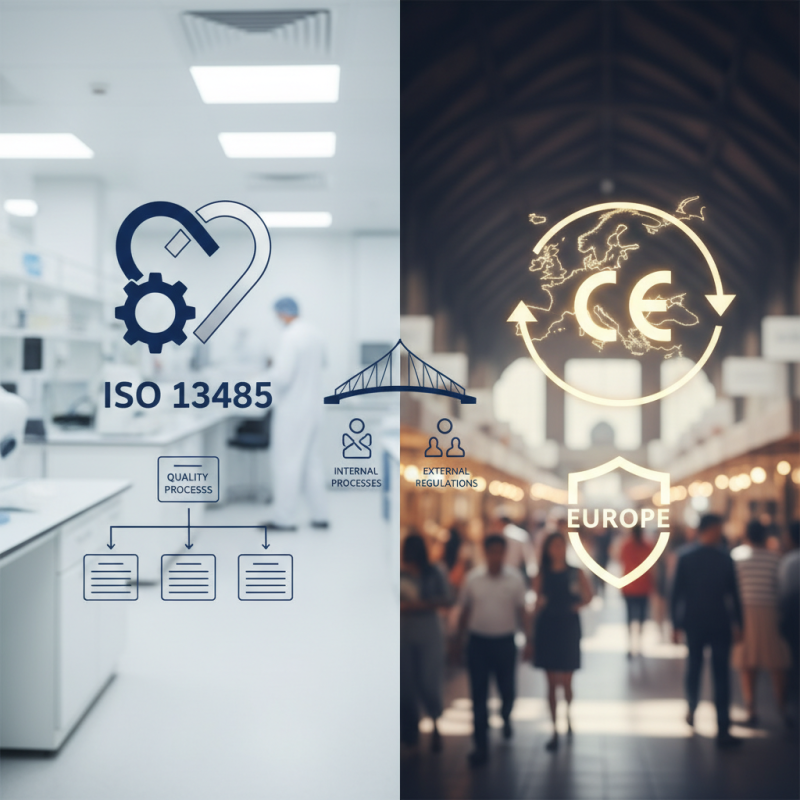
ISO 13485 is a key standard in the medical device industry. It focuses on quality management systems. The aim is to ensure products meet both customer and regulatory requirements. To comply with ISO 13485, organizations must follow a structured approach. This includes risk management, documentation, and continuous improvement.
Understanding its principles is crucial. First, organizations need a comprehensive understanding of processes. This means identifying what a product needs at each stage. Next, it emphasizes the importance of customer feedback. Regular assessments help to evaluate effectiveness. Yet, some companies overlook this aspect. They may not fully utilize customer insights to drive improvements.
Compliance with ISO 13485 can be demanding. Staff training is essential but often neglected. Insufficient training can lead to poor implementation. Moreover, continuous monitoring is vital for success. Companies sometimes struggle to maintain the necessary focus. This can hinder their progress. Balancing these requirements requires ongoing attention and reflection.
This chart compares the global adoption rates of ISO 13485 and CE Certification. ISO 13485 is widely adopted for quality management system standards, while CE Certification is crucial for compliance in European markets.
CE certification is a crucial step for medical device manufacturers. It serves as a declaration that a product meets EU safety requirements. The primary purpose is to ensure that products can be sold in the European Economic Area. CE marking is essential for accessing a market valued at approximately €500 billion annually.
Understanding CE certification requires familiarity with its regulatory landscape. The European Commission provides guidelines that outline the necessary procedures. Each device category has specific requirements that must be met. Compliance is often verified through a notified body with expertise in relevant fields. According to a recent report by MedTech Europe, over 80% of medical devices in Europe carry the CE mark, emphasizing its significance in ensuring device safety and effectiveness.
While the process appears straightforward, many manufacturers face challenges. For example, documentation and technical file requirements can be daunting. The lack of clarity in some guidelines can also lead to misinterpretations. This underlines the importance of seeking expertise in the CE certification process. Manufacturers often need to invest in training and resources to navigate these complexities effectively. Understanding CE certification is not just beneficial; it’s essential for market success.
| Dimension | ISO 13485 | CE Certification |
|---|---|---|
| Definition | An international standard for quality management systems for medical devices. | A certification mark indicating conformity with health, safety, and environmental protection standards for products sold within the European Economic Area. |
| Scope | Applicable to organizations involved in the design, development, production, and servicing of medical devices. | Covers a wide range of products, not limited to medical devices, ensuring they meet EU regulations. |
| Regulatory Body | International Organization for Standardization (ISO). | European Union (EU) regulatory authorities and notified bodies. |
| Purpose | To enhance customer satisfaction through effective quality management. | To ensure products meet safety and health protection requirements in the EU market. |
| Benefit | Improvement in operational efficiency and quality of products and services. | Facilitation of market access to the European Economic Area. |
ISO 13485 and CE certification are essential in the medical device industry. ISO 13485 focuses on quality management systems. It establishes a framework for organizations to ensure consistent product quality. This standard guides businesses in meeting regulatory requirements. Achieving ISO 13485 shows a commitment to quality, enhancing credibility.
CE certification, on the other hand, emphasizes product compliance with European Union regulations. It signifies that a medical device meets safety and efficacy requirements. Unlike ISO 13485, which applies to the organization, CE certification is product-specific. This distinction can confuse many companies. It’s critical to understand that achieving ISO does not automatically mean a product is CE certified.
Organizations may struggle with both processes. They often misinterpret the relationship between ISO 13485 and CE certification. While ISO provides a quality framework, CE certification demands compliance with specific regulations. This can lead to gaps in understanding. Addressing these gaps is vital for successful product launch in the EU market. Companies should seek expertise in both areas. Engaging professionals can greatly improve clarity.
ISO 13485 certification plays a crucial role in the medical device sector. According to a report by Research and Markets, the global market for ISO 13485 certifications is expected to reach $30 billion by 2025, reflecting the growing emphasis on quality management in healthcare. Achieving ISO 13485 demonstrates a commitment to providing safe and effective medical devices. This standard focuses on risk management and continuous improvement, essential components for regulatory compliance.
Emphasizing ISO 13485 allows organizations to streamline processes. An analysis by the International Organization for Standardization found that companies with this certification experience a 20% reduction in product recalls. This statistic underscores the standard's importance in enhancing product reliability. Furthermore, achieving this certification can lead to better market access, increasing competitiveness in a crowded space.
While the benefits are clear, challenges exist. Some manufacturers may struggle with the complexities of meeting stringent requirements. Misinterpretation of the standards can result in costly non-compliance issues. To navigate these obstacles, investing in training and expert consulting is vital. The commitment to ISO 13485 can significantly boost an organization's reputation among stakeholders and customers alike.
CE certification is crucial for any company seeking to access the European market. This certification verifies that a product meets European safety and health standards. It is an essential step for medical devices and other goods. A CE mark enables products to be sold throughout the European Economic Area. This access can significantly boost sales and brand reputation.
Obtaining CE certification also opens doors to new partnerships. Collaborations with European distributors often hinge on having this certification. Companies can gain trust and credibility in a competitive market. Without it, products may face delays or, worse, rejection by regulatory authorities.
The process of achieving CE certification can be challenging. Companies must demonstrate compliance through extensive documentation and testing. Understanding these requirements is essential. Some businesses struggle to navigate this process. They may overlook critical details that could lead to compliance failures. Engaging with experienced consultants can provide valuable insights. They can guide firms towards successful certification while minimizing risks.
: CE certification is a declaration that a product meets EU safety requirements. It is essential for market access.
It allows products to be sold in the European Economic Area, enhancing sales and brand reputation.
Manufacturers often struggle with documentation requirements. Misinterpretations of guidelines can also cause compliance issues.
It helps in securing collaborations with European distributors, building trust and credibility in the market.
Without certification, products may face delays or rejections by regulatory authorities. This impacts sales potential.
Engaging with experienced consultants can provide valuable guidance. They help navigate complexities and minimize risks.
Yes, over 80% of medical devices in Europe carry the CE mark, highlighting its importance for safety and effectiveness.
No, each device category has specific requirements. Understanding these nuances is crucial for compliance.
Companies need to ensure thorough documentation and compliance with all detailed requirements to avoid potential failures.
While possible, many struggle with the complexities. Seeking expertise may lead to a smoother process and better outcomes.
In the realm of medical device regulation, understanding the distinction between ISO 13485 and CE certification is crucial for manufacturers aiming for compliance and market access. ISO 13485 is an international standard that outlines the requirements for a quality management system specific to the medical device industry, focusing on consistent design, development, production, and delivery of medical devices that meet customer and regulatory requirements. On the other hand, CE certification is a mark that indicates a product's conformity with European health, safety, and environmental protection standards, enabling access to the European market.
What is the difference between ISO 13485 and CE certification? Essentially, ISO 13485 serves as a framework for quality management, while CE certification is a regulatory requirement for products sold in Europe. Achieving ISO 13485 certification can enhance a company’s credibility and efficiency, whereas obtaining CE certification is vital for legally marketing products within the European Union, thus emphasizing the importance of both in their respective contexts.
