Why Are Medical Consumables Regulated Differently Globally?

Time:2026-09-18 Author:Isabella
0%

Why are medical consumables regulated differently in various regions? The answer begins with risk, not geography alone. A sterile syringe, wound dressing, diagnostic swab, and implant accessory may all support patient care. Yet their failure risks are not identical. The World Health Organization’s Global Atlas of Medical Devices identifies more than two million device types and over 7,000 generic categories. That scale makes one universal rule difficult to apply.

Regulators also inherit different healthcare systems, manufacturing capabilities, surveillance resources, and public expectations. The United States may require 510(k) clearance, De Novo classification, or premarket approval. The European Union applies risk classes under the Medical Device Regulation. China, Japan, and other markets use their own registration pathways. These systems often pursue similar goals, but they measure evidence and post-market responsibility differently. As WHO medical-device expert Dr. Adriana Velazquez Berumen has emphasized, “There is no one-size-fits-all approach to medical devices.” The wording is simple. The practical consequences are not.

Industry reports reveal the pressure behind these differences. MedTech Europe’s market analyses show the sector’s enormous product diversity, while WHO reports continue to highlight uneven regulatory capacity between countries. A product can be low risk during ordinary use, then become critical during a shortage or emergency. That complicates neat classifications. It also challenges the assumption that stricter always means safer. This article examines how risk classification, evidence standards, supply chains, and local policy shape global regulation. The picture remains imperfect—and deserves careful reflection.
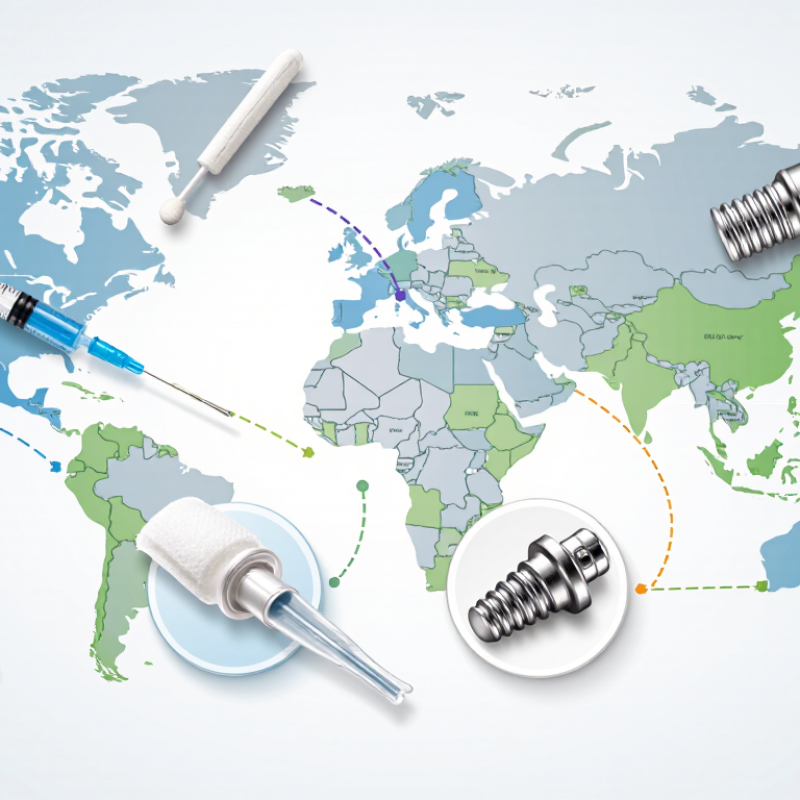
Why Are Medical Consumables Regulated Differently Globally?

Defining Medical Consumables and Their Regulatory Scope

Medical consumables are products used during diagnosis, treatment, monitoring, or patient care. Many are discarded after one procedure or have a limited service life. Examples include syringes, surgical gloves, wound dressings, infusion tubing, specimen containers, and sterile swabs. Some products touch blood or tissue. Others only support sample collection or clinical hygiene.

Their regulatory scope depends on intended purpose, not appearance alone. A plastic tube may be a simple accessory, a specimen device, or part of a higher-risk system. Regulators often examine patient contact, sterility, materials, performance, labeling, and contamination risks. Measuring functions can increase scrutiny. Reusable items may also fall within medical device controls, despite not being traditional consumables.

The boundary is not always neat. A product sold for general laboratory use may face different requirements when intended for patient diagnosis. This creates practical problems for manufacturers and hospitals. Product descriptions must remain precise. A vague label can change the regulatory pathway. I have seen teams focus too heavily on disposal status. That is an imperfect approach. The real question is how the product is used, what harm may occur, and what evidence supports its safety. Requirements also differ between jurisdictions, so one approval route rarely fits every market.

How Risk Classification Shapes Global Regulatory Requirements

Why Are Medical Consumables Regulated Differently Globally?

How Risk Classification Shapes Global Regulatory Requirements

Medical consumables are not regulated by appearance alone. Their risk classification usually depends on intended use, invasiveness, contact duration, and patient exposure. A sterile wound dressing may face different requirements from a non-sterile examination glove. A blood-collection tube can also require extra controls because sampling affects diagnosis.

Risk classes guide the evidence regulators expect. Lower-risk products may need basic safety records, clear labeling, and manufacturing controls. Higher-risk products often require stronger clinical evidence, biocompatibility testing, sterility validation, and detailed technical documentation. Measuring products may need accuracy data too. Small design changes can alter the classification.

In practice, regulatory work is rarely a simple checklist. Teams review intended-use wording, packaging claims, material specifications, and production records together. A vague label can create avoidable questions. A minor change in contact time may also trigger reassessment. That part is easy to underestimate.

Classification systems differ between jurisdictions because regulators weigh public-health risks differently. Some focus heavily on invasiveness, while others examine duration or clinical function. Therefore, one product may need different submission routes across markets. The scientific principles remain similar, but the evidence threshold and review process can change.

Regulatory decisions are not always perfectly predictable. Borderline products require careful interpretation. Manufacturers should document their reasoning, consult qualified professionals, and update post-market records when real-world feedback reveals unexpected risks. Static files age quickly. Continuous review matters.

Why Are Medical Consumables Regulated Differently Globally?

How Risk Classification Shapes Global Regulatory Requirements

The number of principal risk classes differs across regulatory frameworks. Classification is generally based on factors such as invasiveness, duration of contact, active or implantable status, and the potential harm caused by device failure. A higher risk class typically requires stronger clinical evidence, tighter quality controls, and more comprehensive pre-market review.

Class counts are not directly equivalent between jurisdictions: a three-class system may apply requirements comparable to a four-class system because each authority uses different rules, terminology, and classification criteria.

Reference frameworks: U.S. FDA, EU Medical Device Regulation (2017/745), Health Canada, Australia TGA, and Japan PMDA. Counts represent principal classes for general medical devices and exclude separate in-vitro diagnostic classifications and national subcategories.

Key Differences in Approval, Quality, and Safety Standards

Why Are Medical Consumables Regulated Differently Globally?

Key Differences in Approval, Quality, and Safety Standards

Medical consumables are regulated differently because countries assess risk through separate legal and clinical systems. A disposable syringe may receive a simple pathway in one market but require extensive evidence elsewhere. Classification often depends on intended use, contact duration, sterility, and patient risk. The same product can therefore face different approval timelines, documents, and testing requirements.

Approval usually begins with technical files, manufacturing details, risk analysis, and performance data. Some authorities accept established international standards, while others request local clinical evidence or additional laboratory testing. Quality reviews may examine cleanroom controls, supplier records, packaging integrity, and batch traceability. Small details matter. A damaged seal can compromise sterility before the product reaches a hospital.

Safety standards also differ after approval. Certain markets require incident reporting, periodic inspections, and formal post-market surveillance. Others depend more heavily on importer oversight or hospital feedback. In practice, regulators may interpret similar evidence differently, especially when terminology is unclear. That creates avoidable delays.

A test report may look complete but still miss a regional requirement. This is where careful regulatory experience becomes valuable. Teams should map each market’s rules before production, not after shipment. They should also verify shelf-life claims under realistic heat and humidity conditions. Laboratory results are important, but real storage conditions can be less forgiving. No framework is flawless. Even strong systems need clearer communication, better data sharing, and regular review when new safety concerns appear.

Why Are Medical Consumables Regulated Differently Globally? – Key Differences in Approval, Quality, and Safety Standards

Regulatory Market Typical Product Classification Primary Approval or Market-Entry Route Quality-System Expectations Safety and Performance Evidence Post-Market and Traceability Requirements
United States Class I, II, or III, based on risk and intended use. Many low-risk, non-sterile products may receive exemptions. Depending on risk: exemption, 510(k) premarket notification, De Novo classification, or premarket approval. Establishments generally require registration and product listing. A quality management system is required under applicable device-quality regulations. Alignment with ISO 13485 is widely used, but the applicable legal requirements control. Device-specific evidence may include biocompatibility, sterility, packaging integrity, shelf life, bench testing, and clinical evidence where needed. Sterile products require validated sterilization and packaging processes. Complaint handling, medical-device reporting, corrections and removals, and applicable unique-device-identification obligations may apply. Requirements vary by device type and risk.
European Union Class I, IIa, IIb, or III under the Medical Device Regulation. Sterile, measuring, and reusable surgical instruments can require additional conformity assessment. Conformity assessment under Regulation (EU) 2017/745, followed by an EU declaration of conformity and CE marking. A notified body is generally involved for higher-risk devices and certain Class I products. Quality management systems commonly follow ISO 13485 principles. Manufacturers must maintain technical documentation, risk management, clinical evaluation, and post-market surveillance documentation. General Safety and Performance Requirements apply. Evidence can include biological evaluation under ISO 10993 principles, sterilization validation, usability, performance testing, and clinical evaluation proportionate to risk. Post-market surveillance, vigilance reporting, trend reporting, corrective actions, and registration or identification obligations apply. Economic operators must be clearly identified in the supply chain.
United Kingdom Risk-based classes broadly similar to international device classifications, with separate rules for sterile, measuring, and higher-risk products. Great Britain generally uses UKCA requirements under the applicable UK medical-device framework, while transitional arrangements may permit certain CE-marked devices for defined periods. Northern Ireland has separate arrangements linked to applicable EU rules. Manufacturers need documented quality, risk-management, technical-file, and post-market processes. Third-party conformity assessment may be required depending on the product and route. Evidence typically covers intended use, safety, performance, biological safety, sterility, packaging, and clinical or performance evaluation appropriate to risk. Products placed on the market in Great Britain generally require registration with the national regulator. Vigilance, incident reporting, corrective actions, and supply-chain responsibilities apply.
Canada Class I through IV, with Class I representing the lowest risk and Class IV the highest risk. Class I devices generally require establishment licensing, while Class II, III, and IV devices generally require medical-device licensing. Class II–IV applications require evidence appropriate to the risk class. Manufacturers of Class II–IV devices generally require certification to a quality-management standard recognized by the Canadian regulator, commonly based on ISO 13485. Applications may include device descriptions, labeling, risk analysis, verification and validation, biocompatibility, sterilization, and clinical evidence, with depth determined by classification. Mandatory problem reporting, recalls, complaint records, and distribution information apply. Some products also require additional importation or establishment controls.
Japan Class I, II, III, or IV under a risk-based system. Sterile and higher-risk consumables generally require more extensive review. Class I products may use notification, while many Class II products use certification or approval routes. Class III and IV products generally require formal approval, with route details depending on the device. Manufacturers and marketing authorization holders must maintain quality and manufacturing controls. Japanese requirements may require localized documentation and procedures in addition to internationally recognized systems. Evidence can include performance, biological safety, sterilization, stability, risk management, and clinical data. Japanese-language labeling and locally applicable standards may be required. Adverse-event reporting, safety information collection, recalls, and authorization-holder responsibilities apply. Distribution and importer information must be controlled and documented.
Australia Class I, Is, Im, Ir, IIa, IIb, III, or active implantable, depending on risk, invasiveness, duration of use, and other characteristics. Most therapeutic devices must be included in the Australian Register of Therapeutic Goods before supply. Conformity-assessment evidence is required, with additional scrutiny for higher-risk products. Manufacturing evidence may be based on an accepted quality-management certificate or other recognized conformity-assessment documentation, depending on the device and manufacturer location. Evidence may cover intended purpose, risk management, biological safety, sterility, packaging, shelf life, and clinical or performance data proportional to classification. Sponsors and manufacturers must support adverse-event reporting, recalls, corrective actions, and ongoing compliance. Supply and sponsor records must be maintained.
China Class I, II, or III, with increasing regulatory controls according to risk. Class I products generally use filing, Class II products generally require registration at the provincial level, and Class III products generally require national registration. Imported products must meet applicable import requirements. Manufacturers need documented quality-management and production controls. Local inspections, registration testing, and Chinese-language technical materials may be required depending on product and route. Evidence may include technical requirements, product testing, biological safety, sterilization validation, stability, risk analysis, and clinical evaluation or clinical trials where required. Adverse-event monitoring, recalls, re-evaluation, and traceability obligations apply. Registration holders and distributors must maintain product and supply-chain records.
India Class A, B, C, or D, from low to high risk, under the Medical Devices Rules. Class A and B products generally follow registration or licensing routes with lower levels of review than Class C and D. Higher-risk products generally require more extensive documentation, inspection, and evidence. Manufacturers must maintain a quality-management system and comply with applicable manufacturing, inspection, documentation, and licensing conditions. The depth of controls depends on risk class. Technical documentation may include risk management, essential-principle compliance, performance testing, biological safety, sterilization, stability, and clinical evidence where applicable. Manufacturers and importers must support complaint handling, adverse-event reporting, recalls, and distribution records. Labeling and authorized-agent requirements may apply to imports.
Common International Baseline Risk classification is commonly influenced by invasiveness, duration of contact, active functions, sterility, intended use, and potential harm. Many jurisdictions use a manufacturer declaration for low-risk products and third-party or regulatory review for higher-risk products. Recognition of foreign approvals is not automatic. ISO 13485 is widely used as an international quality-management reference, but certification alone does not replace local legal obligations or market authorization. Common evidence areas include ISO 14971-based risk management, ISO 10993-based biological evaluation, sterilization validation, packaging integrity, shelf life, and documented performance testing. Most systems require complaint investigation, incident or adverse-event reporting, corrective and preventive action, recall capability, and records sufficient to identify affected products and distribution channels.

Note: Requirements can change by product type, intended use, sterility status, contact duration, manufacturing location, and regulatory transition rules. A product classification should be confirmed against the current legislation and guidance in the target market.

The Role of International Bodies and National Health Authorities

Why Are Medical Consumables Regulated Differently Globally?

International bodies create common principles, but national health authorities decide how those principles work locally. The World Health Organization reports more than two million medical device types across over 7,000 generic groups (WHO, Medical Devices Fact Sheet, 2023). This scale makes one universal rule unrealistic. A sterile syringe, wound dressing, and diagnostic strip may face different risks. Regulators therefore assess intended use, contact duration, sterility, and clinical consequences.

The International Medical Device Regulators Forum promotes shared terminology and risk-based approaches. These tools can reduce duplicated reviews and clarify technical expectations. However, national authorities still control market authorization, inspections, labeling, and post-market surveillance. A product accepted in one jurisdiction may need additional evidence elsewhere. Local disease patterns, hospital capacity, and reporting systems influence those decisions. Regulation follows context.

The numbers show why access matters. The WHO Global Report on Assistive Technology estimates that 2.5 billion people need at least one assistive product, rising to 3.5 billion by 2050. Although assistive products are not identical to consumables, the pressure on supply systems is comparable. Overly complex rules can delay essential supplies. Weak oversight can create preventable harm. The difficult part is balance. In procurement reviews, paperwork often appears stronger than real-world monitoring. That is an uncomfortable gap. Better cooperation between international bodies and national authorities could close it, but harmonization alone will not solve every problem.

Challenges Created by Divergent Regulatory Systems

Medical consumables are regulated differently because countries define risk, evidence, and responsibility in different ways. The World Health Organization’s Global Atlas of Medical Devices 2022 identifies about two million medical device types across more than 7,000 generic groups. That scale makes one universal rule difficult. A sterile dressing may face simple notification in one market, but require clinical evidence and continuous monitoring elsewhere.

These differences create practical pressure for manufacturers, hospitals, and importers. One authority may focus on sterility and packaging integrity. Another may examine intended use, biocompatibility, or supplier audits. The OECD Regulatory Policy Outlook 2021 shows that regulatory impact assessment and international cooperation remain uneven among jurisdictions. Consequently, identical consumables can need separate technical files, translations, testing plans, and reporting procedures. Small details matter. A changed label can delay approval.

Experience from quality teams suggests that compliance is not only a legal task. It affects inventory planning, staff training, and patient access. However, harmonisation is not automatically better. Local disease patterns, healthcare capacity, and post-market surveillance differ. A low-resource setting may need simpler evidence pathways, while still demanding reliable safety controls. The difficult question remains: how much variation protects patients, and how much merely increases administrative cost? Current systems do not always answer it clearly. The WHO data also reminds us that classification is imperfect, especially when one product serves several clinical purposes.

FAQS

What are medical consumables?

Medical consumables support diagnosis, treatment, monitoring, or patient care. Examples include syringes, gloves, dressings, tubing, and sterile swabs. Many are discarded after one procedure.

Does a product’s appearance determine its regulatory status?

No. Intended purpose matters more than appearance. A plastic tube may be an accessory, specimen device, or higher-risk component.

Which factors influence regulatory classification?

Authorities may assess patient contact, contact duration, sterility, materials, performance, labeling, and contamination risks. Measuring functions can increase scrutiny.

Are reusable products outside medical device controls?

Not always. Reusable items may still face medical device requirements. Their service life, cleaning process, and patient contact can affect evaluation.

Why can similar products need different approvals?

Countries use different legal and clinical systems. One market may accept a simple pathway, while another requests clinical evidence or extra laboratory testing.

What documents are commonly reviewed during approval?

Reviews may include technical files, manufacturing details, risk analysis, performance data, and traceability records. Clear evidence helps.

How can packaging affect product safety?

A damaged seal can compromise sterility before hospital use. Packaging integrity, cleanroom controls, and batch records often require careful review.

Why should storage conditions be tested realistically?

Heat and humidity can weaken packaging or shorten shelf life. Laboratory results may not reflect a hot, crowded storage room. This is easy to underestimate.

Conclusion

Medical consumables include items used for diagnosis, treatment, monitoring, protection, or routine clinical care, such as single-use instruments, dressings, collection containers, and protective supplies. Their regulatory scope depends on intended use, contact with the body, duration of use, sterility, and potential harm if they fail. Why are medical consumables regulated differently in various regions? The main reason is that each jurisdiction applies its own risk classification framework, healthcare priorities, approval procedures, and interpretation of safety evidence.

Higher-risk products generally require more detailed technical documentation, clinical support, manufacturing controls, and post-market monitoring, while lower-risk items may follow simpler registration pathways. Requirements can also differ in labeling, quality-management systems, sterilization validation, performance testing, and reporting of adverse events. International bodies may encourage common principles and terminology, but national health authorities remain responsible for enforcing local rules. These differences can increase development costs, delay market access, and create compliance challenges for manufacturers and healthcare providers, making careful regulatory planning essential.

Isabella

Isabella

Isabella is a dedicated marketing professional with a sharp focus on driving brand growth and engagement through strategic content creation. With an extensive background in digital marketing, she combines her passion for storytelling with her keen understanding of industry trends to deliver......