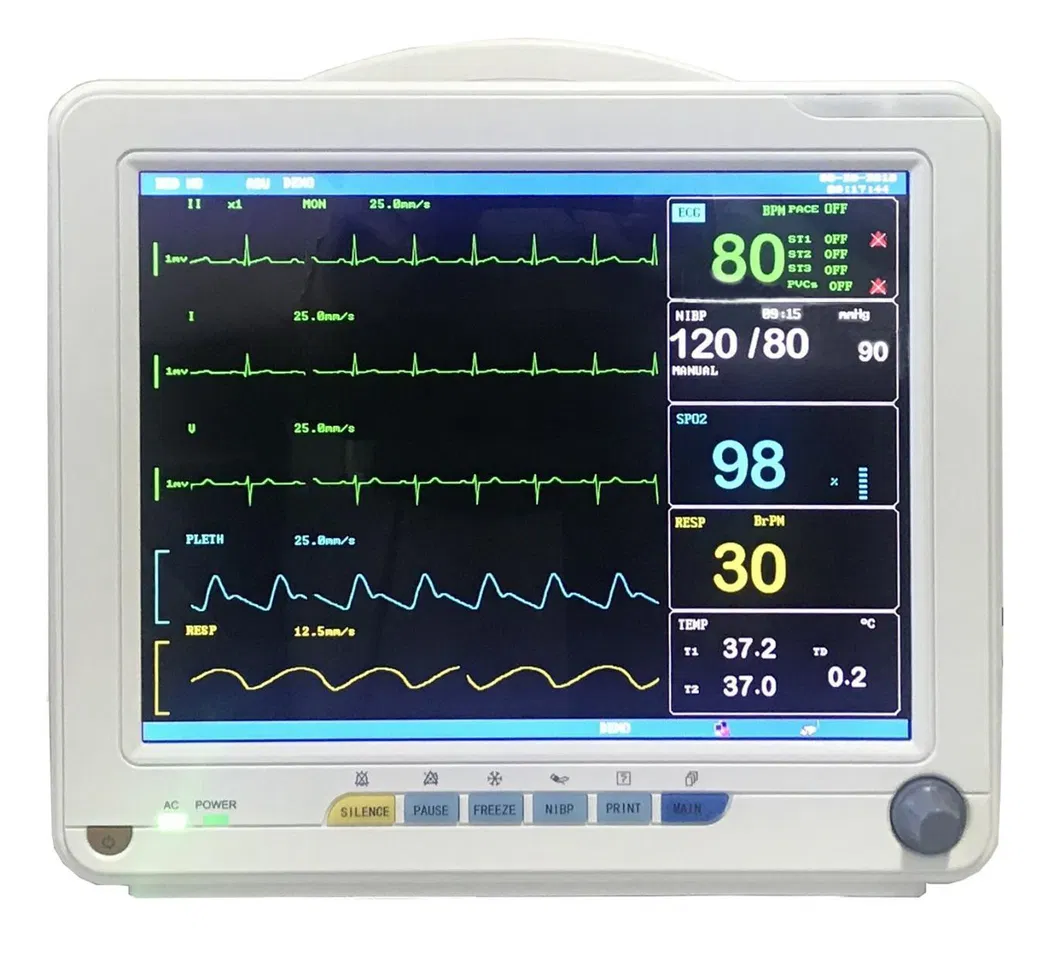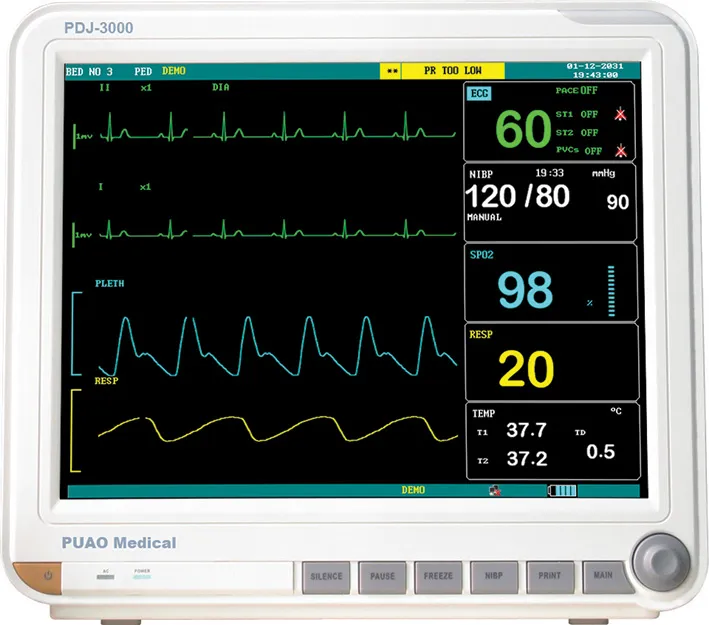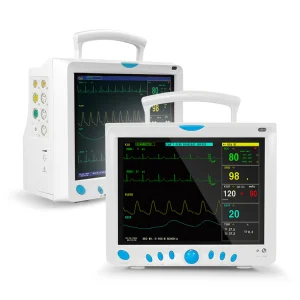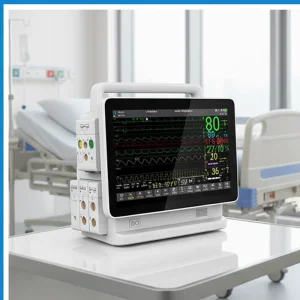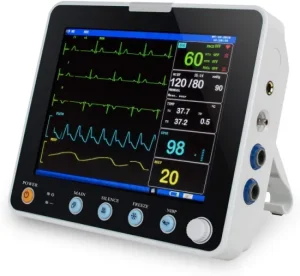
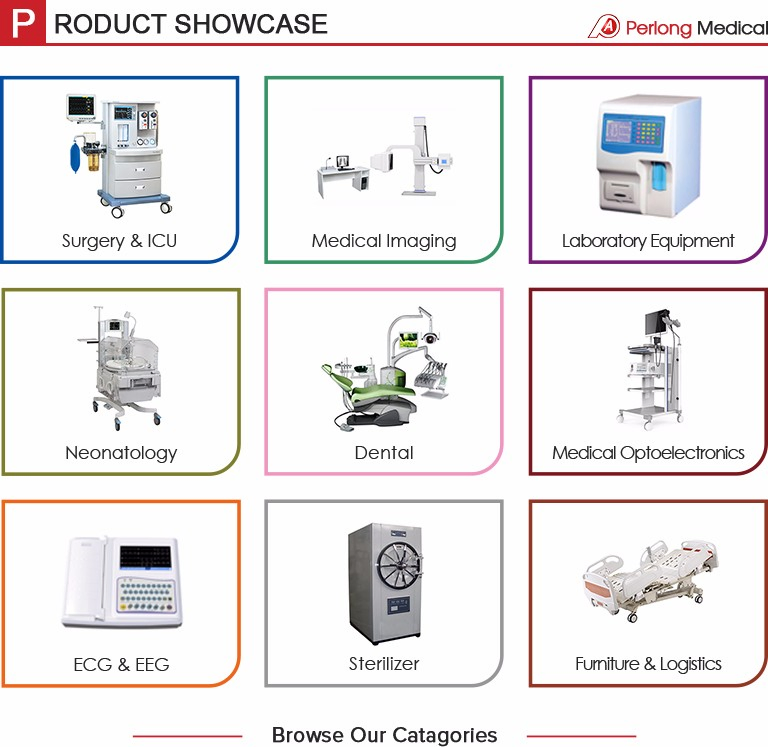

Best ECG Patient Monitoring System

Customization: Available
Classification: Physiological Functions of Diagnosis and Monitoring Equipment
Type: Patient Monitor

Product Description

📊 Basic Information
Model NO.
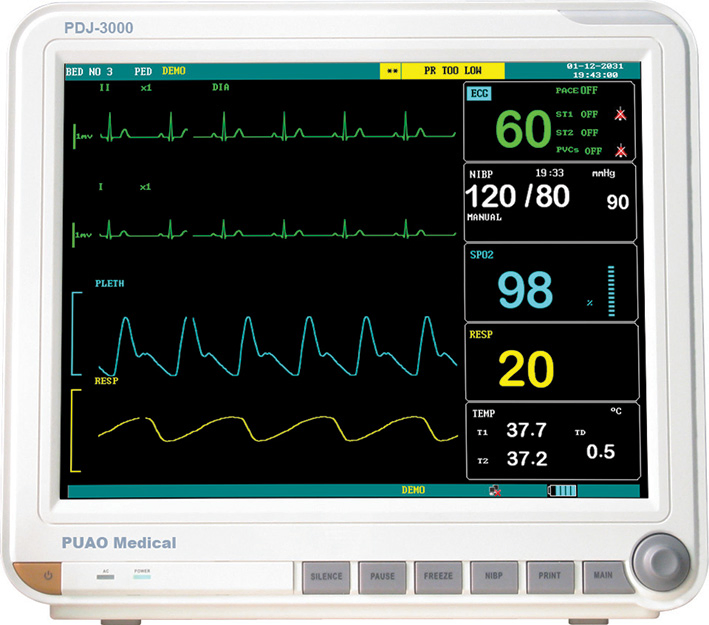
PDJ-3000
Certification
CE, ISO13485
Group
Patient
Color
White
Display
8.4 Inch
Sweep Speed
12.5mm/S, 25mm/S, 50mm/S
Spo2 Range
0-100%
Accuracy
± 2% (70~100%)
Origin
China
HS Code
9018193010
📋 Product Description
Patient Monitoring System
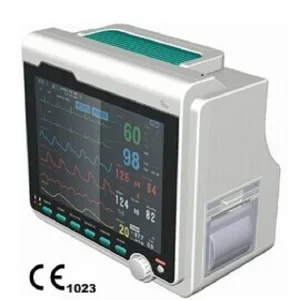
ECG Patient Monitoring System
✨ Key Features
  • 8.4" color TFT display
  • Suitable for adult, pediatric and neonatal patient
  • Basic parameters (ECG, SpO2, NIBP) in a durable case for bedside monitoring and transport
  • Audible and visual alarms with adjustable alarm ranges
  • Networkable with central monitoring system
  • Powerful data management and storage capacity
⚙️ Technical Specifications
ECG Monitoring
  • Lead type: 5-lead (RA; LA; RL; LL; V)
  • Sweep speed: 12.5mm/s, 25mm/s, 50mm/s
  • Accuracy: ± 1 bpm or ± 1%
  • Protection: Withstand 4000VAC/50Hz voltage isolation
  • S-T detection & Arrhythmia analysis: Supported
NIBP Monitoring
  • Method: Oscillometry
  • Operation modes: Manual/Automatic/STAT
  • Measurement: Systolic, Diastolic, Mean
  • Over-pressure protection: Yes
SpO2 Monitoring
  • Measurement range: 0-100%
  • Accuracy: ± 2% digit (70~100%)
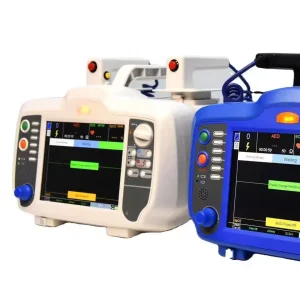
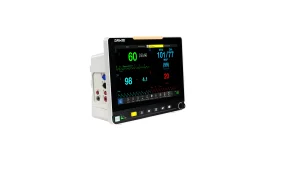
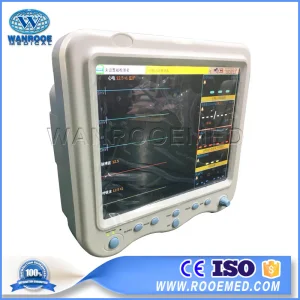
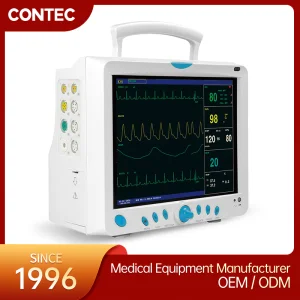
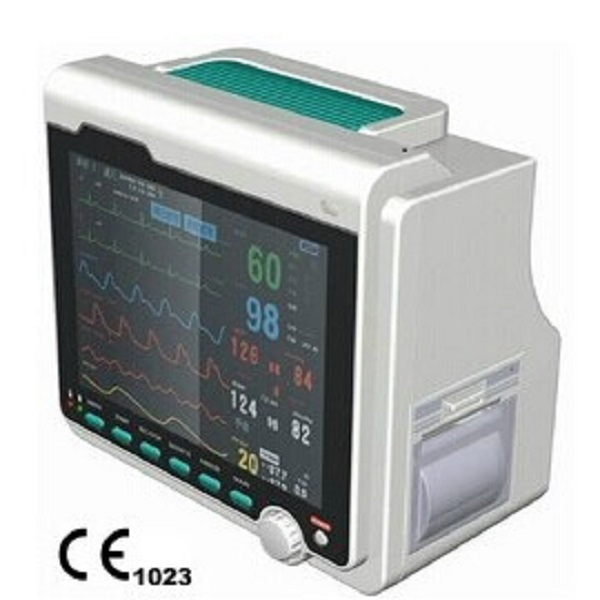
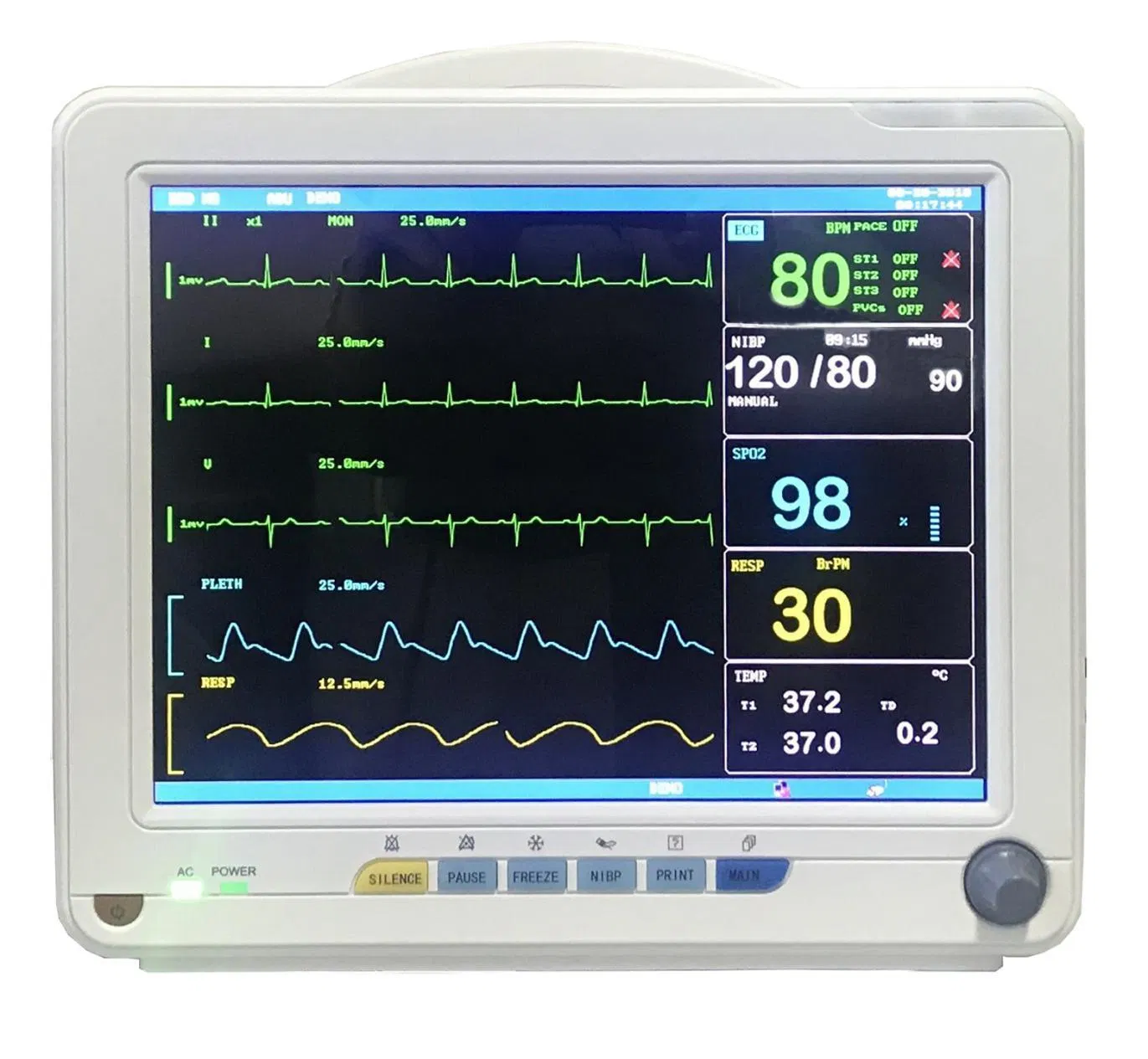
Medical Monitor Detail
Medical Monitor Interface
Medical Device View
📦 Configuration

Standard Configuration: ECG, NIBP, SpO2, thermal printer

Optional Configuration: RESP, 2-TEMP, 2-IBP, ETCO2, Network
Full Product Specification
❓ Frequently Asked Questions
What patient groups can use the PDJ-3000 monitor?
The PDJ-3000 is versatile and designed for use with adult, pediatric, and neonatal patients.
What are the standard monitoring parameters included?
The standard configuration includes ECG, SpO2, NIBP, and a thermal printer for data output.
Is this monitor suitable for transport within a hospital?
Yes, it features a durable case specifically designed for both bedside monitoring and mobile transport needs.
Can the device be connected to a hospital network?
Yes, the device is networkable and can be integrated with a central monitoring system.
Does the monitor provide arrhythmia analysis?
Yes, it includes built-in S-T segment detection and arrhythmia analysis for comprehensive cardiac monitoring.
What optional features can be added to the system?
Optional upgrades include RESP, 2-TEMP, 2-IBP, ETCO2, and network connectivity modules.

Related Products