🩺
Product Description
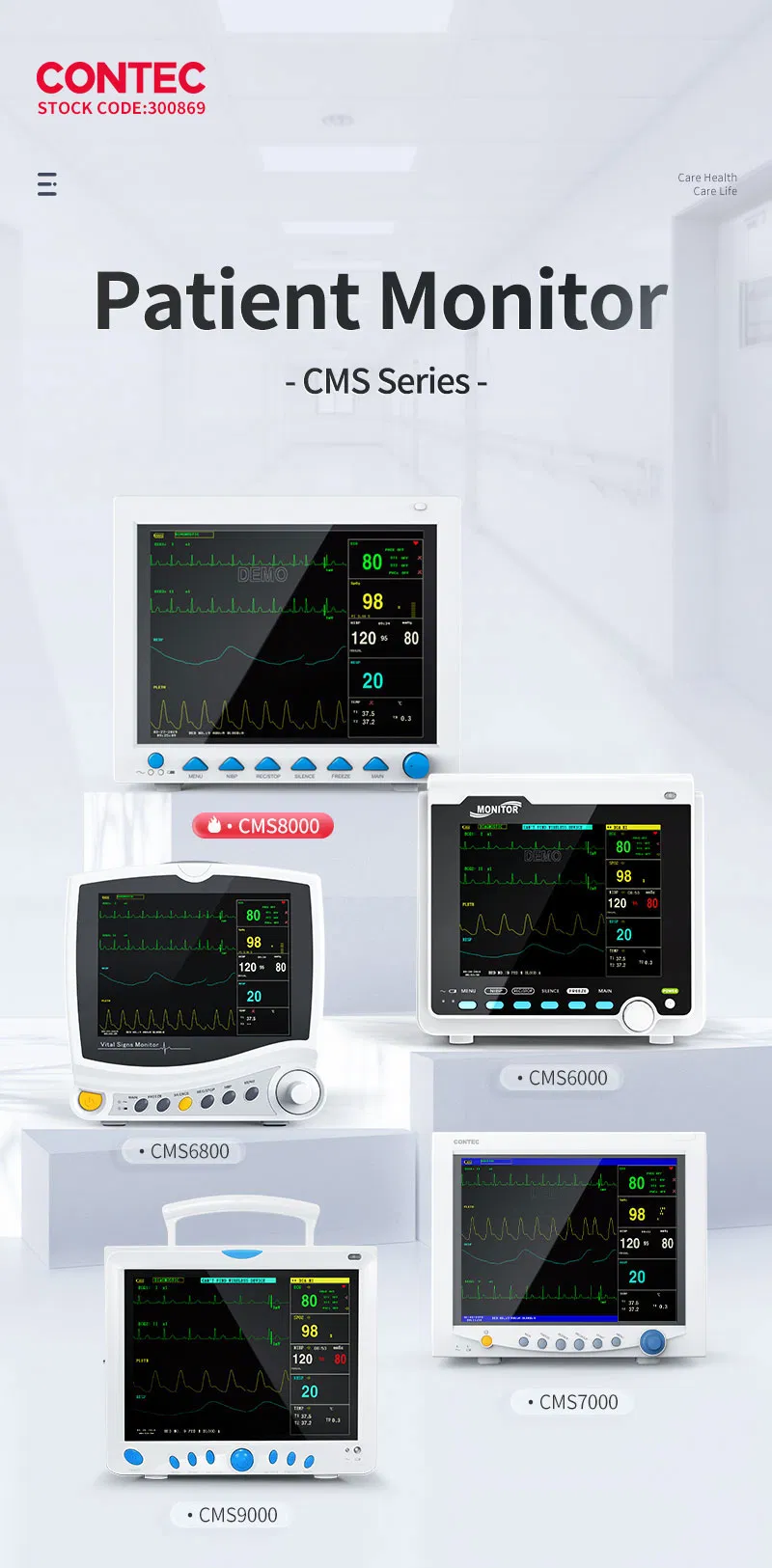
Professional Medical Patient Monitoring System
Introduction
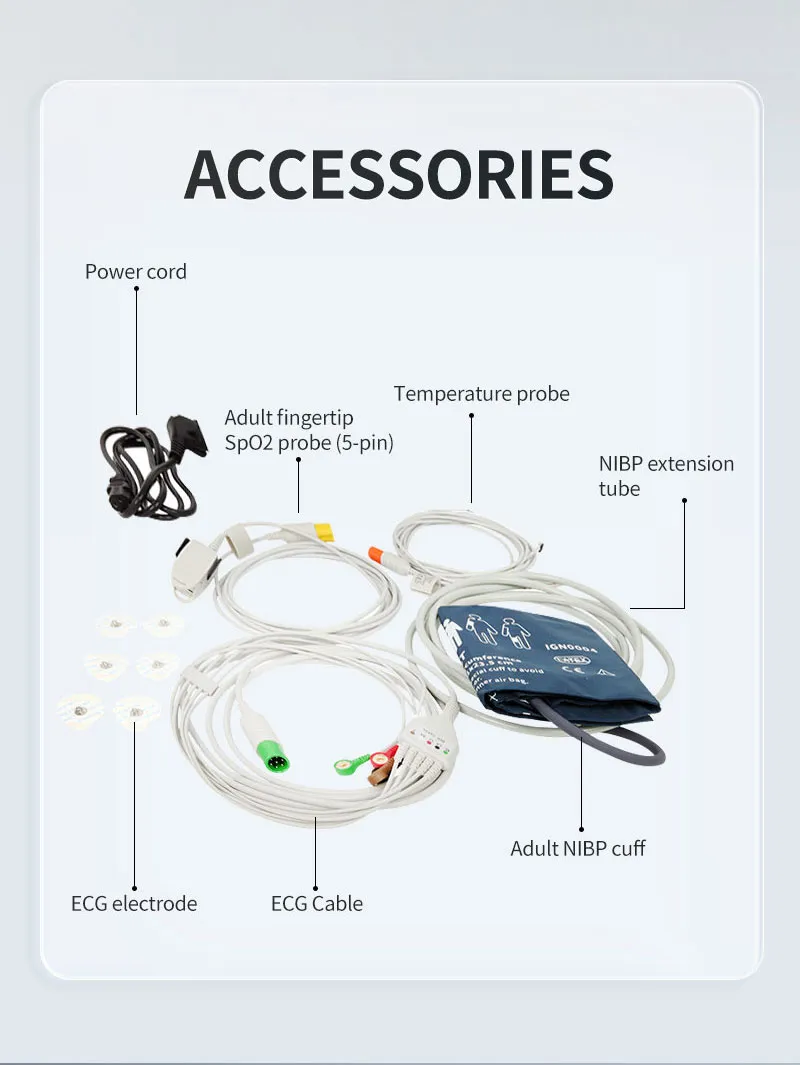
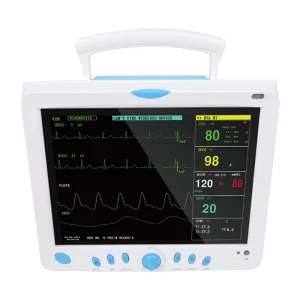
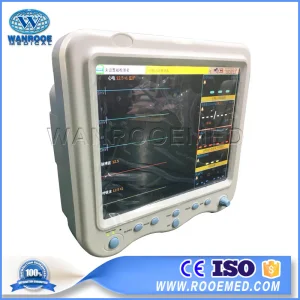
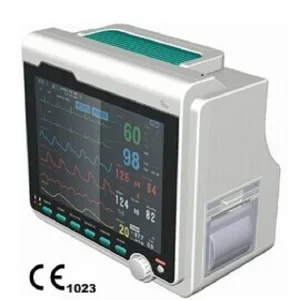
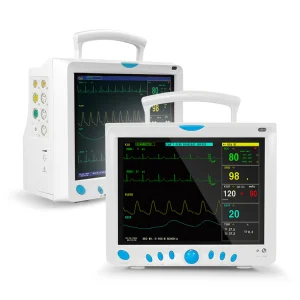
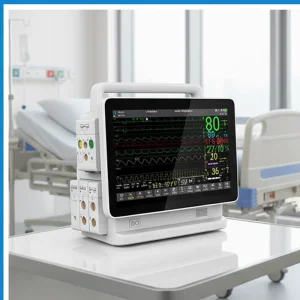
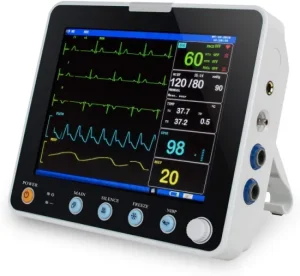
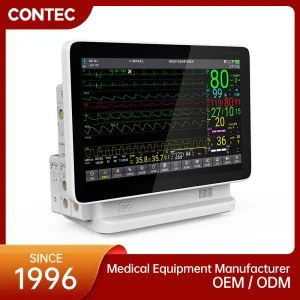
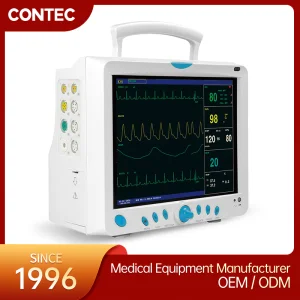
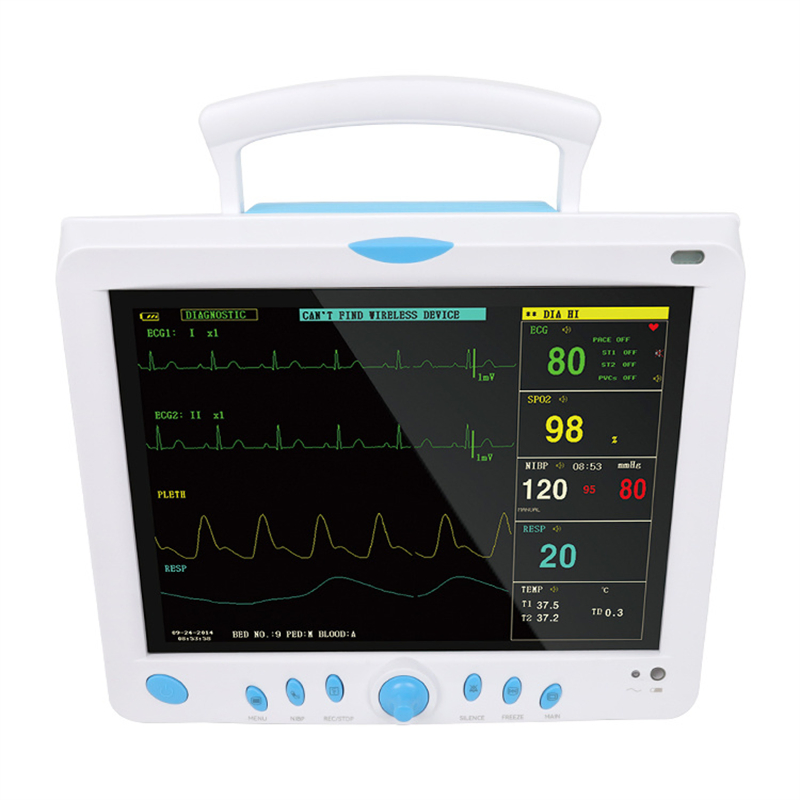
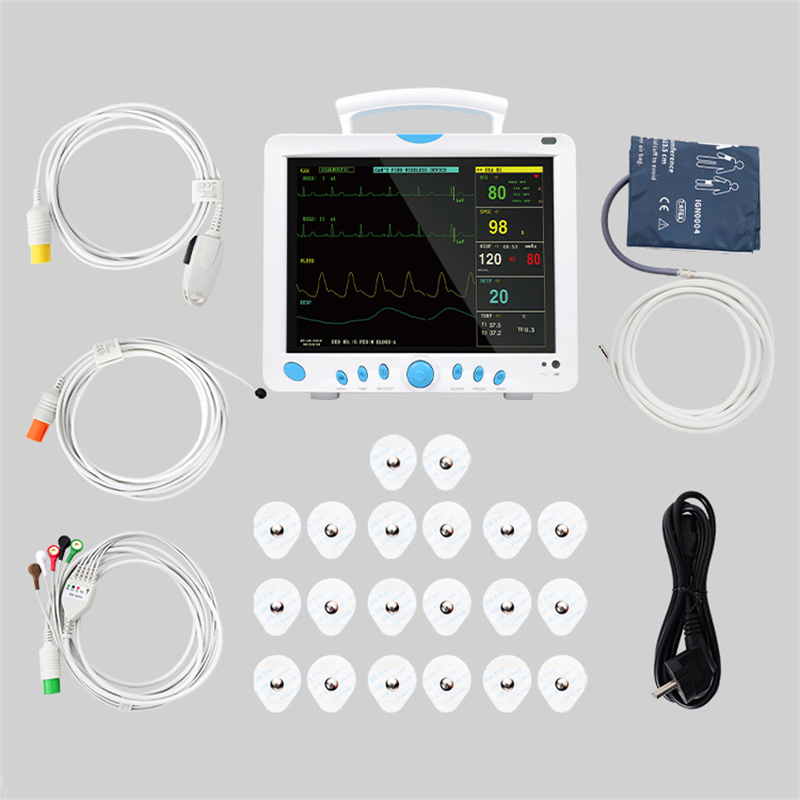
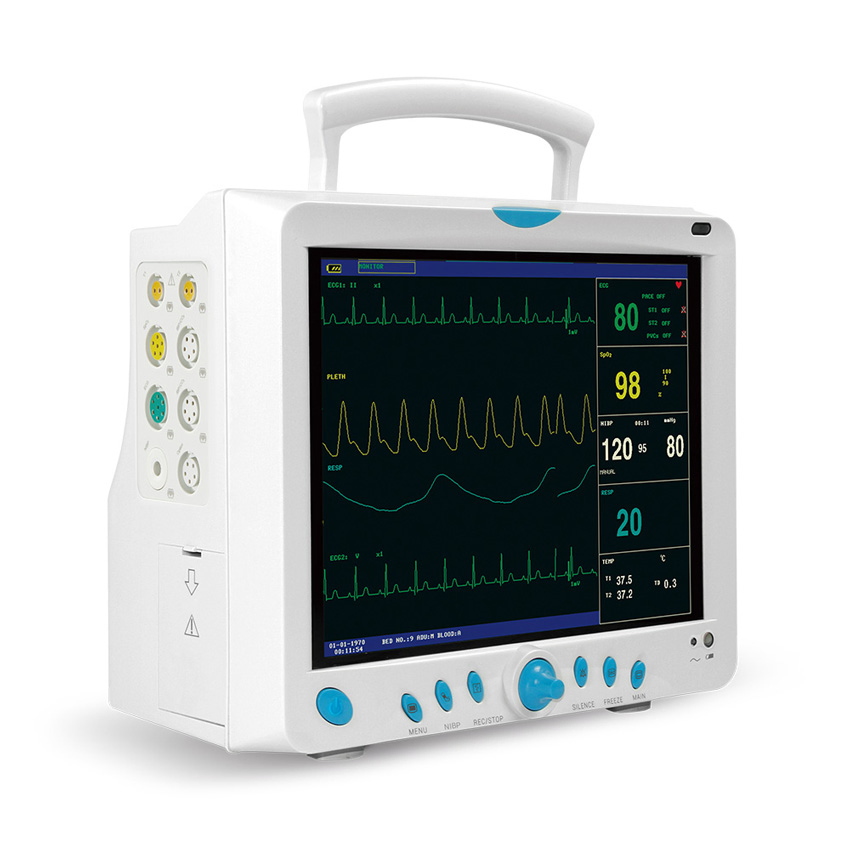
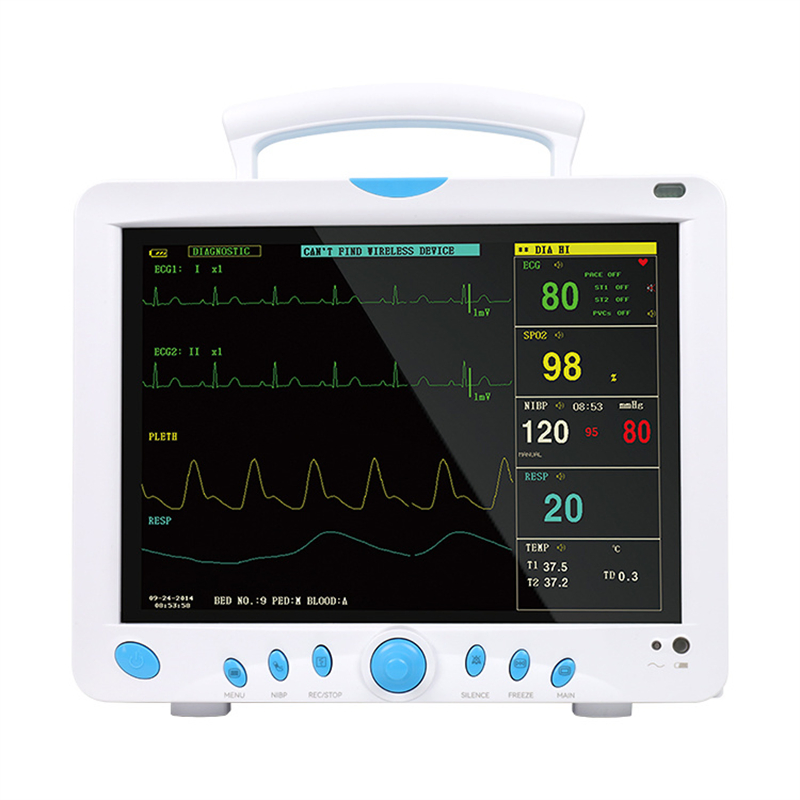
This device can monitor parameters such as ECG, RESP, SpO2, PR, NIBP, and dual-channel TEMP. It integrates the parameter measurement module, display, and recorder into one compact and portable unit. The built-in replaceable battery ensures continuous monitoring during patient transport.
Key Features
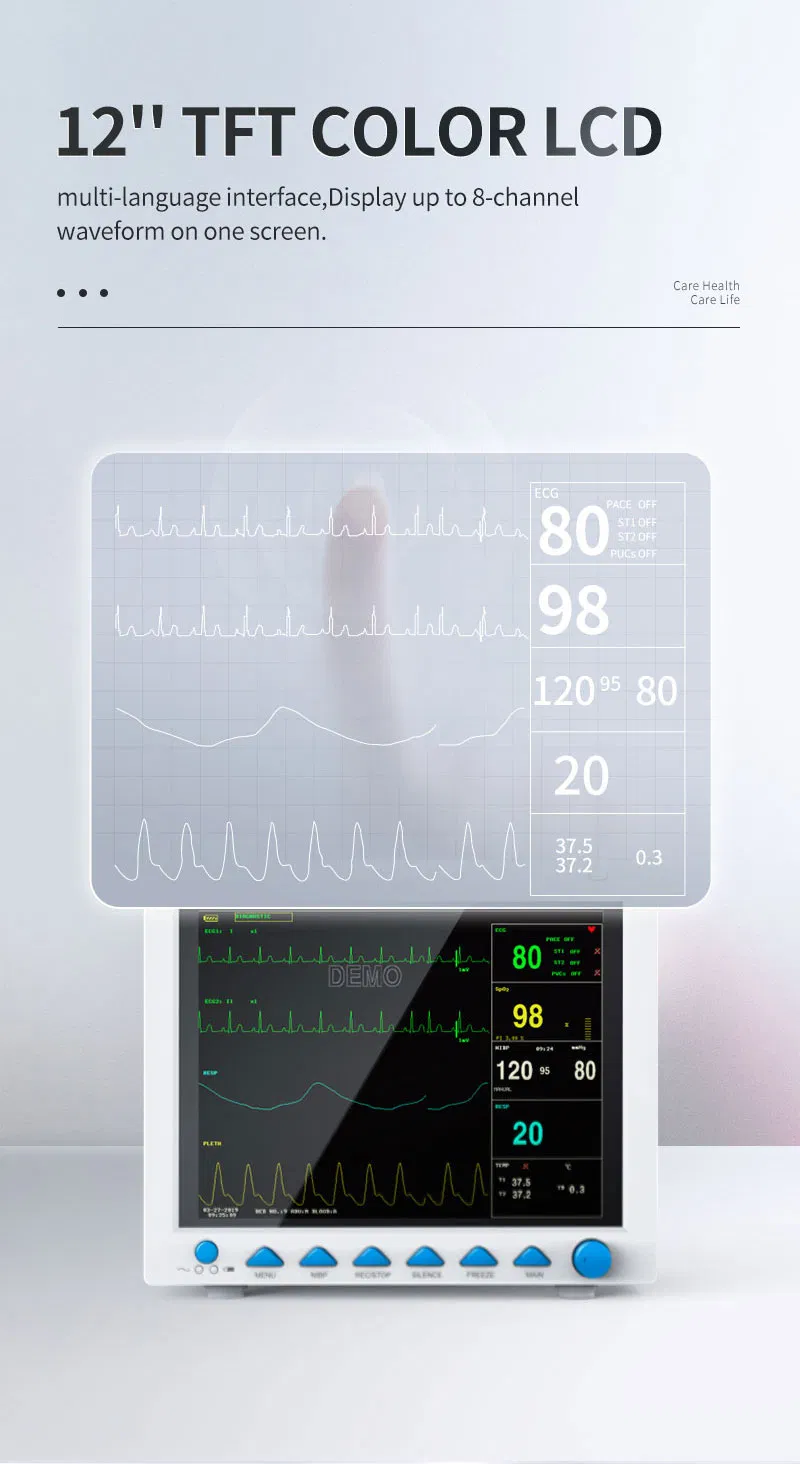
- 12.1'' TFT color LCD with multi-language interface support (English, French, German, Spanish, Portuguese, etc.).
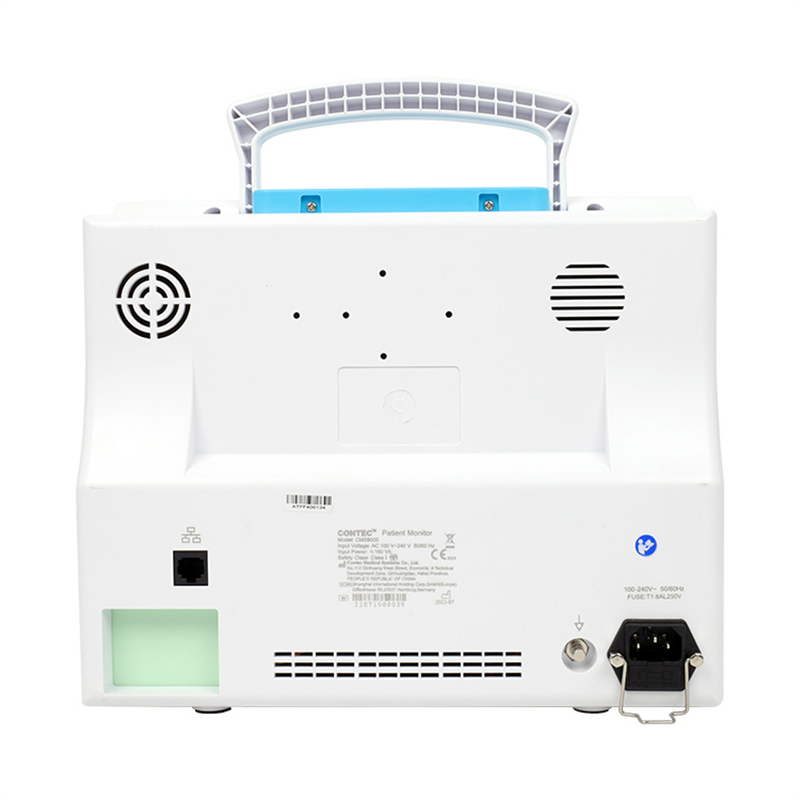
- Fanless design for quiet, energy-saving operation and reduced cross-infection risk.
- Versatile monitoring suitable for adult, pediatric, and neonatal patients.
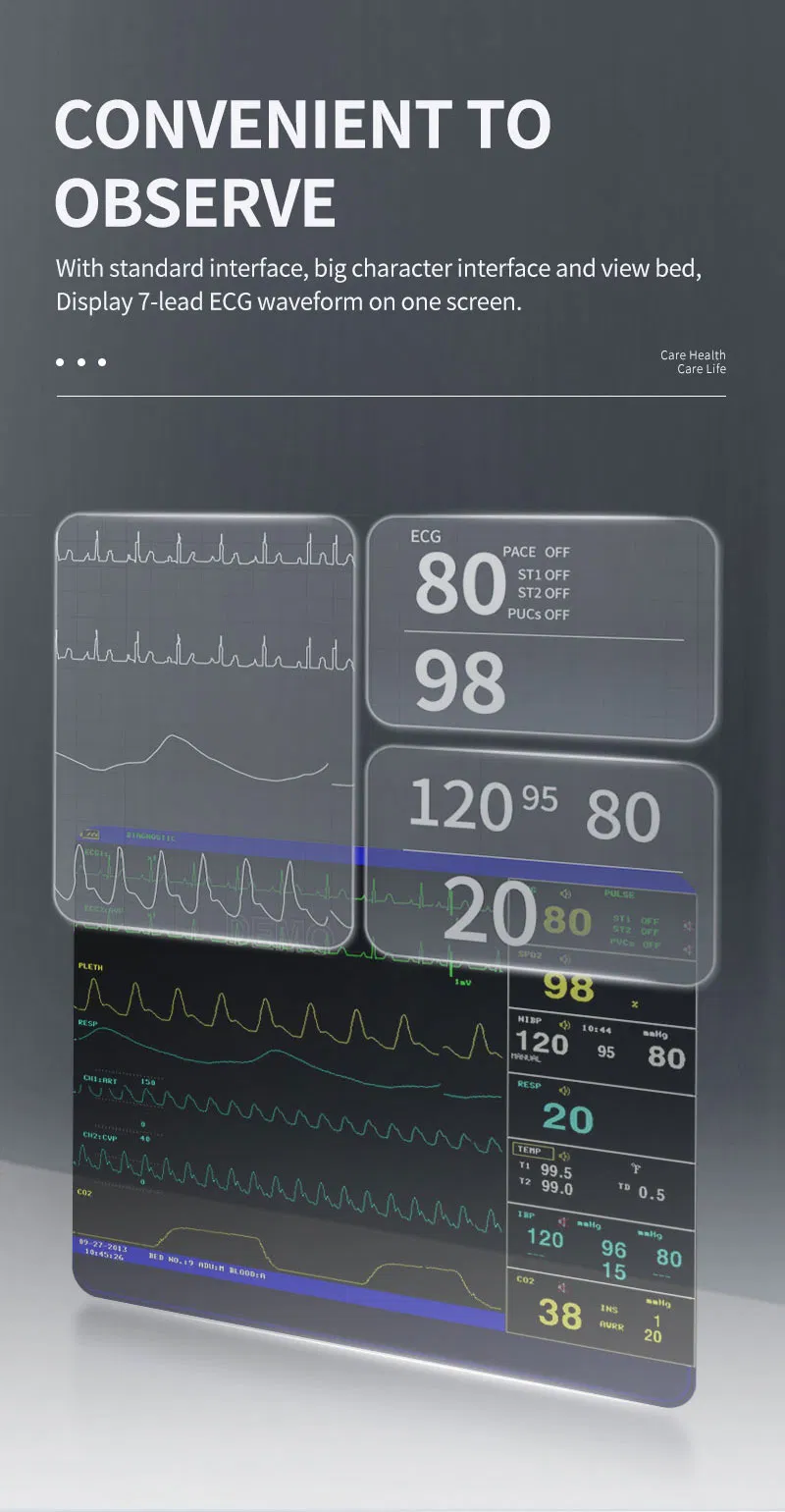
- Multiple display modes: Standard interface, OxyCRG, trend charts, and big character view.
- Up to 8-channel waveform display on a single screen.
- Digital SpO2 technology with anti-ambient light interference.
- NIBP storage for 4800 groups of data and 72 alarm event reviews.
- Drug concentration calculation and titration table functions.
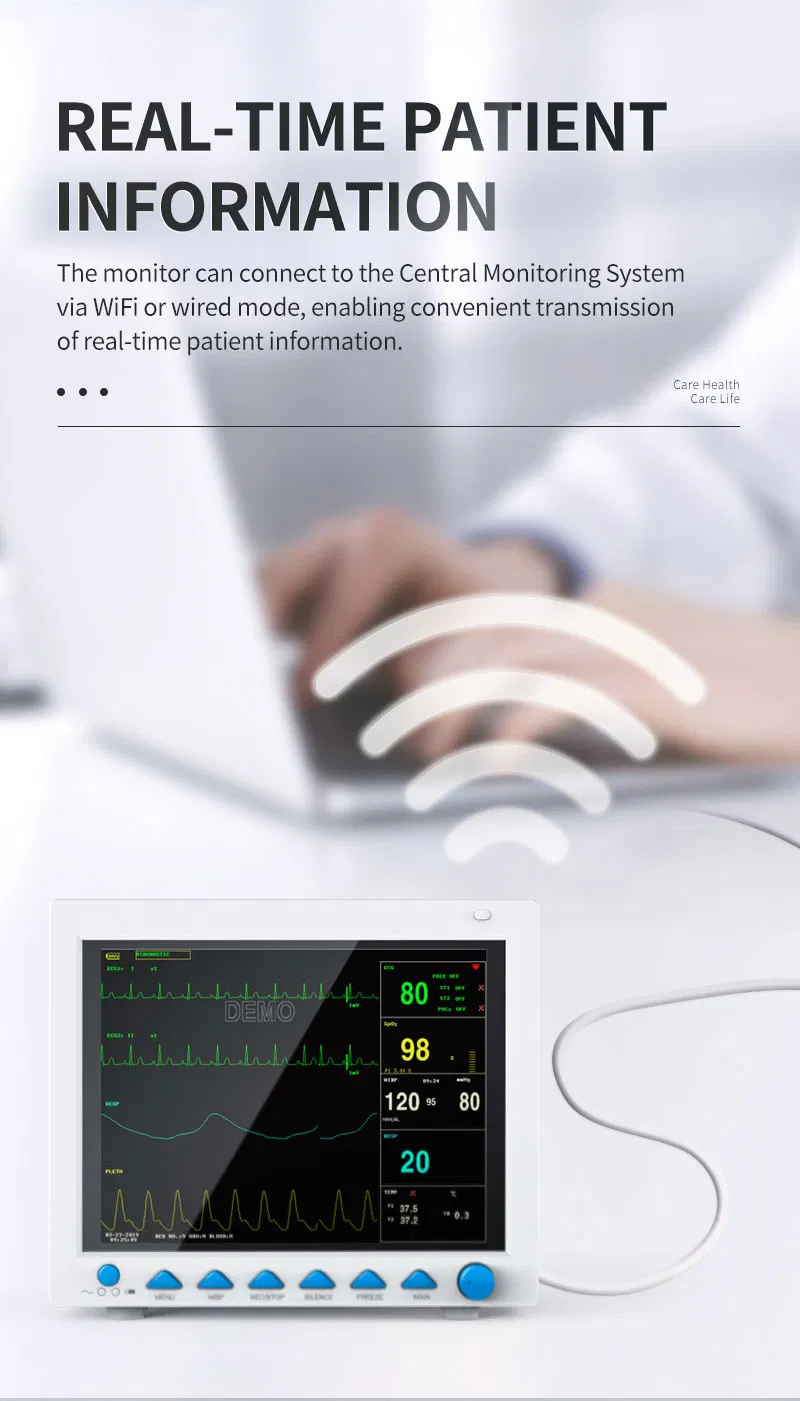
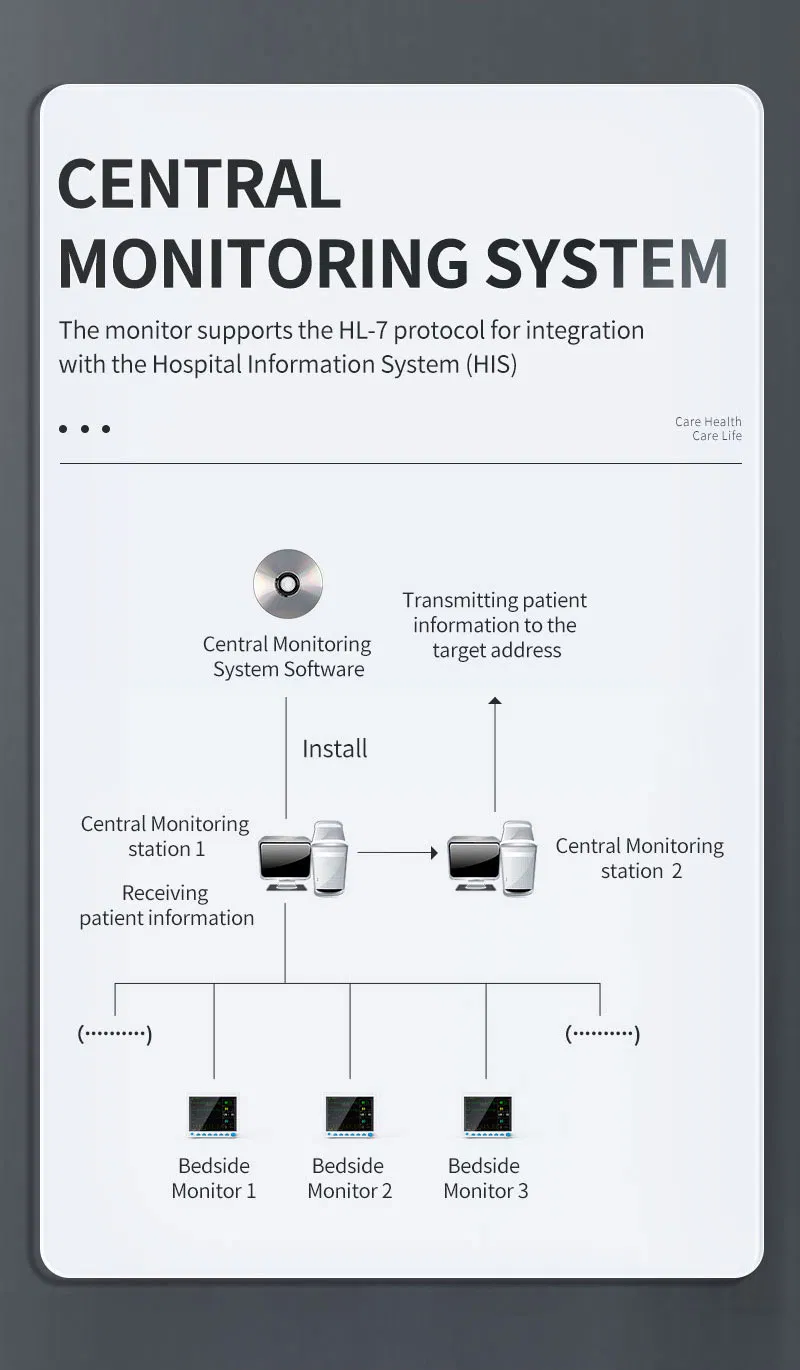
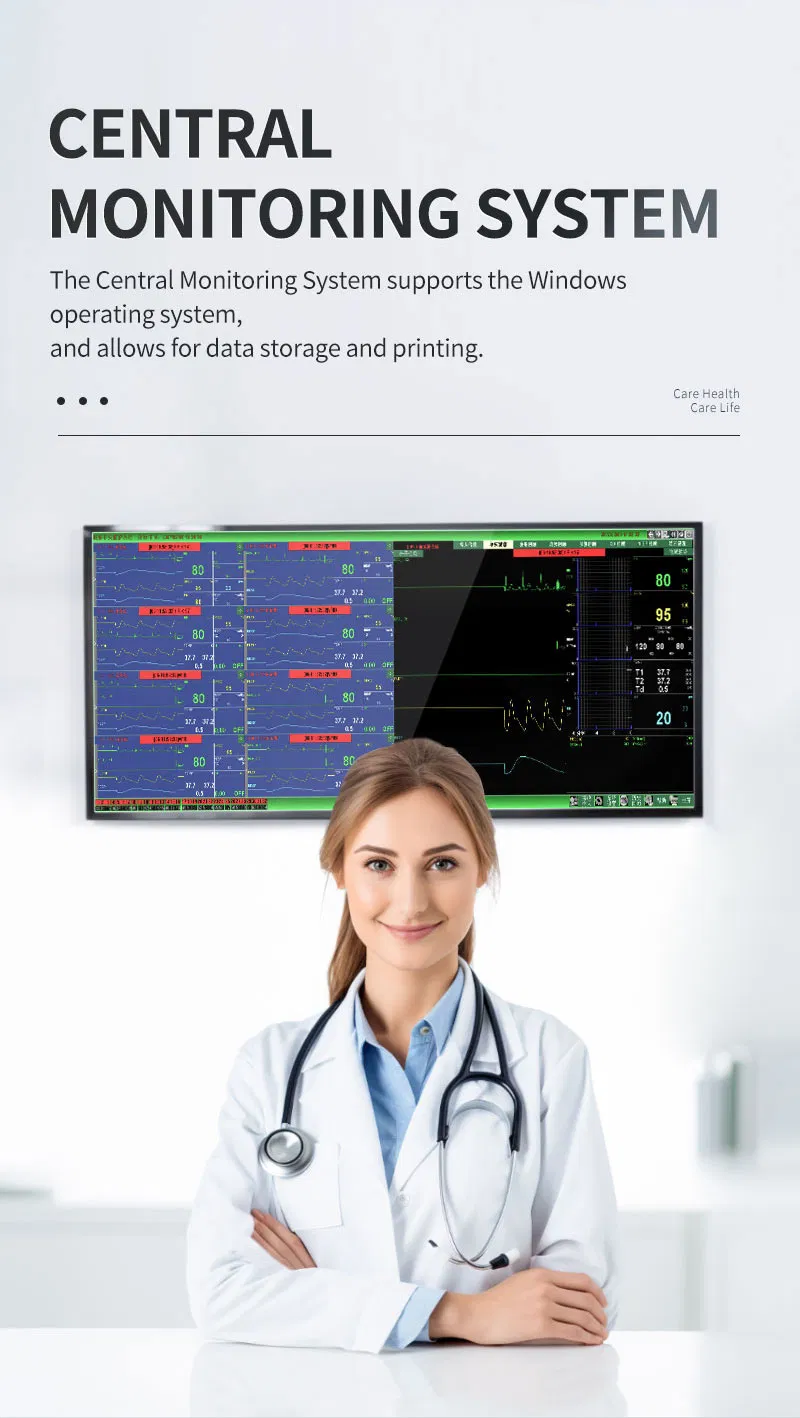
- Central Monitoring System connectivity via WiFi or wired modes.
- Defibrillation-proof design (requires special leads).
Technical Functions
ECG
Heart rate, Waveform, Arrhythmia & ST-segment analysis
RESP
Respiration rate and waveform
SpO2
Oxygen saturation, Pulse rate, Plethysmogram, Bar graph
NIBP
Systolic, Diastolic, and Mean pressure
TEMP
Dual-channel T1, T2, and TD
Optional
EtCO2, IBP (CH1/CH2), and Thermal Printer
Frequently Asked Questions
Q1: Which patient groups can the CMS9000 monitor be used for?
A: The device is designed for all-round monitoring and is suitable for adult, pediatric, and neonatal patients.
Q2: Does the monitor support connectivity to a central hospital system?
A: Yes, it can connect to a Central Monitoring System via either WiFi or a wired network mode.
Q3: How portable is the CMS9000?
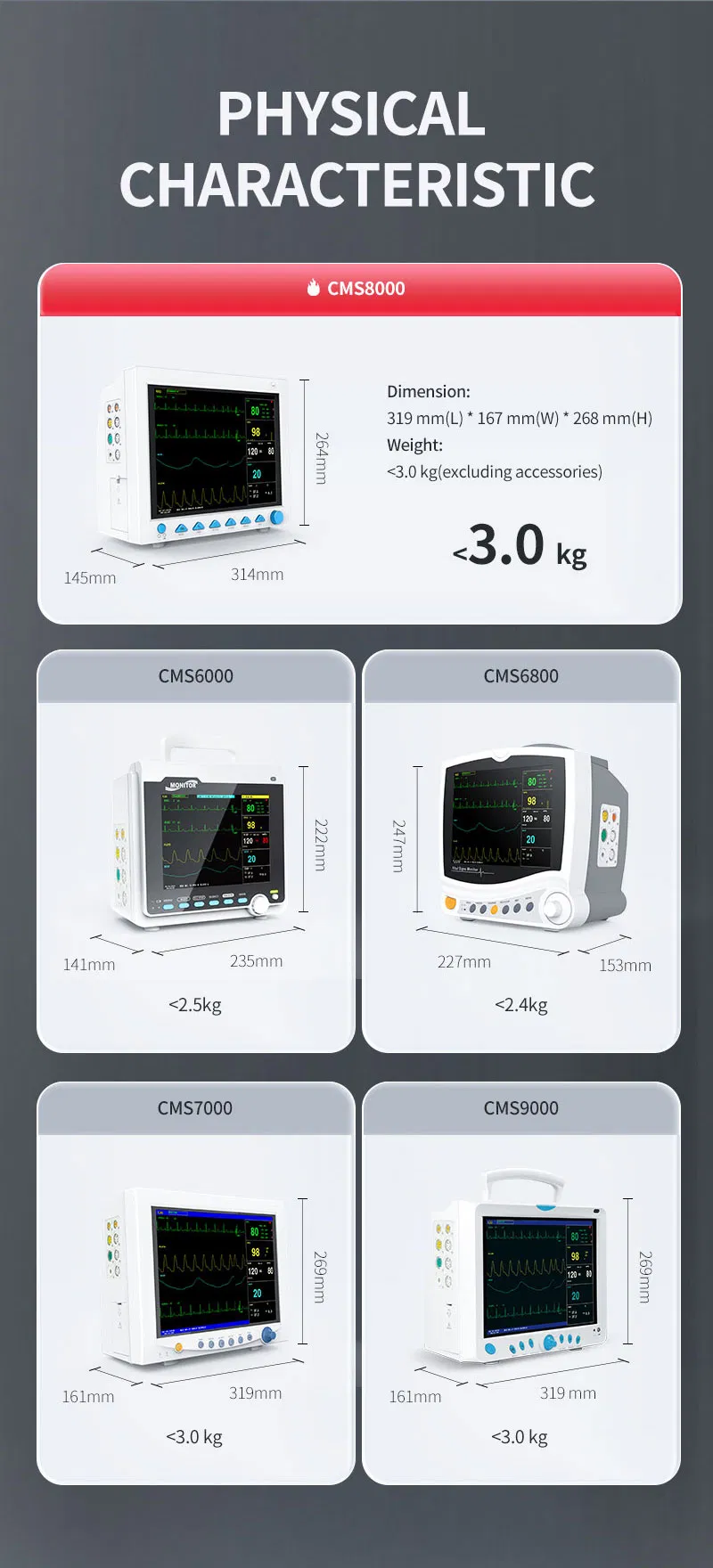
A: It is highly portable, weighing less than 3.0 Kg and featuring a built-in rechargeable lithium battery for uninterrupted use during transport.
Q4: What are the standard parameters included?
A: Standard parameters include ECG (Heart Rate), RESP (Respiration), SpO2 (Oxygen Saturation), PR (Pulse Rate), NIBP (Blood Pressure), and dual-channel TEMP (Temperature).
Q5: Is the monitor's operation quiet enough for bedside use?
A: Yes, it features a fanless design which makes it quiet, energy-saving, and helps in reducing the possibility of cross-infection.
Q6: Can this device store historical patient data?
A: Yes, it can store up to 4800 groups of NIBP data, 72 alarm events of all parameters, and 60 arrhythmia alarm events for review.
 Gray Medical